Wet Beds
What is it
A wet bed (or wet patch) is a section of track where the ballast and sleepers have become saturated, so water and fine material sit within the ballast and formation rather than draining away. Visually, it often appears as a dark, damp area with pumping mud or slurry around the sleepers and a slight dip in the rail running surface.
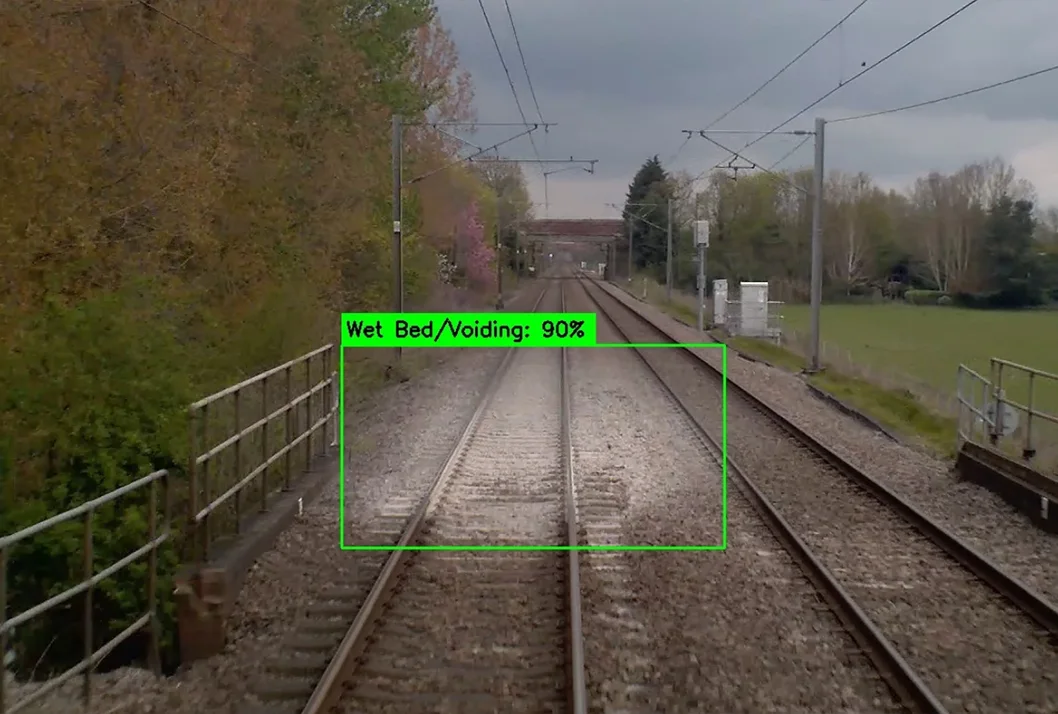
Wed beds are automatically captured and detected by AIVR.
Why it matters
Wet beds reduce the stiffness and strength of the trackbed, so loads from passing trains cause greater deflection, leading to rough rides, dipped joints and accelerated geometry deterioration. Persistent saturation and mud pumping also foul the ballast, undermining drainage further, increasing maintenance needs and, in severe cases, forcing speed restrictions to manage safety risk.
Where and when
Wet beds tend to develop where drainage is poor or water inputs are high, such as in cuttings, low‑lying sections, near blocked culverts, or where formation soils (often clay) are prone to becoming saturated. They are often associated with high rainfall events, seasonal wet periods, or climate‑driven extremes that repeatedly overload legacy drainage systems and trackbeds.
How it develops
Wet beds occur when ballast fails to drain because voids between stones become blocked by fines (particles of rock dust and other small fragments) and contamination, allowing water to accumulate in the ballast and formation. Sources of water and fines include poor or failed drainage, rising groundwater, slurry pumped up from a weak subgrade under repeated loading (mud pumping), and contamination from adjacent soils or shoulders, all of which progressively reduce permeability and stiffness.
Monitoring and maintaining
Traditionally, wet beds have been identified via track patrols, geometry traces and reports of rough rides, triggering manual inspections and intrusive repairs such as ballast and formation renewal, drainage renewal, and re‑ballasting.
One Big Circle’s AIVR platform now supports remote low-ballast detection by capturing forward‑facing video from in‑service trains and applying in‑house machine learning object detection models trained to spot visual signatures of wet beds and voiding, allowing maintenance teams in Network Rail’s Eastern Region and beyond to locate, rank and treat sites more efficiently while reducing boots on ballast.