BVI (Basic Visual Inspection)
What is it
Basic Visual Inspection (BVI) is a term used in the UK for the routine, largely non-instrumented visual check of railway track and associated components to identify immediate or short-term safety and condition issues, typically those needing action within about four weeks.
It has traditionally involved patrollers walking the line, though elements of BVI are increasingly delivered from inspection trains and video platforms such as AIVR.
Why it matters
BVI underpins the wider rail inspection hierarchy, complementing detailed examinations, geometry measurement and ultrasonic testing. It is a primary “front line” defence against derailment and broken rail incidents because it can reveal obvious, evolving defects before they cause failures in service. It also supports cost-effective asset management by spotting early signs of deterioration, allowing maintenance to be planned into possessions rather than reacting to emergencies.
BVI’s strengths are its flexibility, relatively low cost and the human ability to integrate context, noticing “things that don’t look right” which may not fit predefined defect categories or algorithm rules.
Weaknesses include reliance on inspector competence, fatigue and environmental conditions, plus limited coverage time on busy routes, which is why the industry is progressively supplementing it with automated, train-borne and AI-supported track inspection systems, part of a broader move towards boots off ballast. For an example of this in practice, see our work with Network Rail.
Who does it and for whom
Traditionally, trained track patrollers and inspectors employed by the infrastructure manager carry out BVI, working under the technical governance of permanent way engineers and track section managers. Increasingly, infrastructure monitoring teams, including operators of IM trains, Class 153 S&C inspection units and analytics specialists, contribute BVI outputs that are then consumed by route asset managers, planners and maintenance delivery units.
When it is done
BVI follows a defined frequency linked to line speed, traffic density and risk profile, often on a one to four weekly cycle for higher-risk routes. It is also deployed reactively after incidents, extreme weather or significant maintenance work, to confirm the track remains safe and that recent interventions have not introduced new hazards.
BVI requires track closures and possessions. To minimise disruption to services, BVI is often conducted at night.
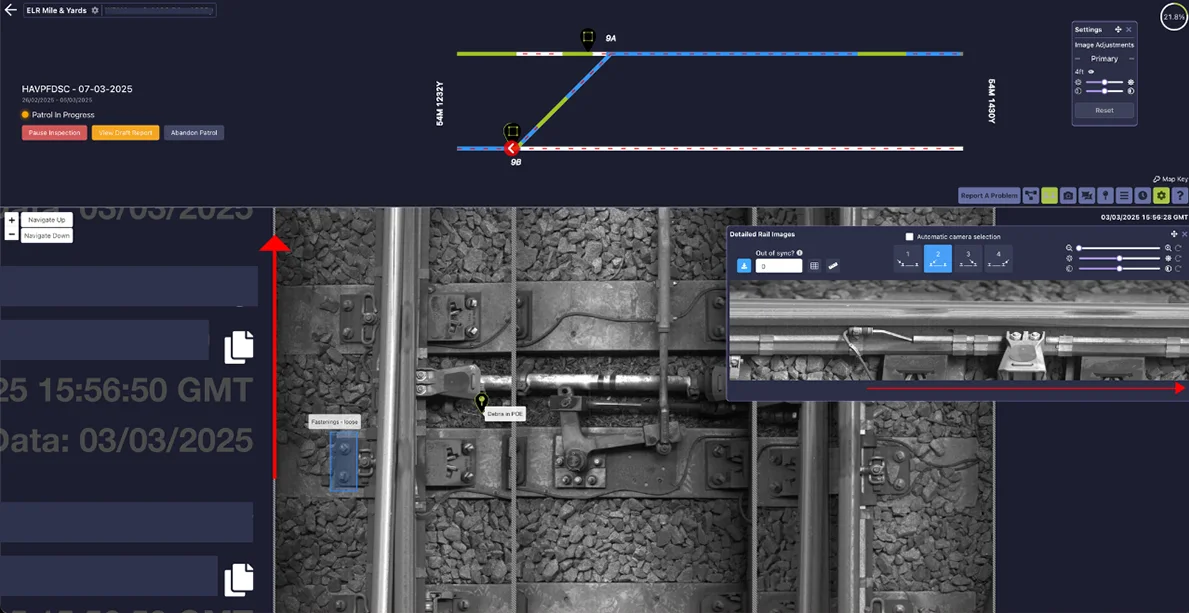
AIVR Forward Facing Video supports remote BVI by capturing high-resolution track video that inspectors review from desktop platforms. This reduces the need for on-foot track access while maintaining comprehensive visual inspection coverage.
How it is done
On-foot BVI involves walking the track, visually checking rails, sleepers, fastenings, ballast condition, drainage, clearances and visible signalling or S&C components, supported by simple tools and hand-held lighting where required. Modern practice adds remote BVI using train-borne video (for example PLPR and Class 153-based S&C inspection) reviewed via desktop platforms such as AIVR Focus, often combined with geometry and other datasets to focus human attention on suspect locations.