16/06/2026
Virtual Lineside & Structure Inspection: Day 2 of Rail Safety Week 2026

Why Lineside Inspection is a Safety Challenge
Day 2 of Rail Safety Week, and we’re turning our attention to the lineside environment.
The railway includes a vast inventory of structures, assets, earthworks, and vegetation that must be regularly inspected and maintained to keep the network safe. This includes retaining walls holding back embankments; bridges carrying roads and footpaths overhead; drainage systems managing water away from the formation; fencing protecting the public from the railway. Much of it has been in place for decades, subject to constant weathering, and the cumulative effect of thousands of train movements every year.
The scale of what needs to be inspected and maintained is vast, and the consequences of missing changes in these assets can be serious: a retaining wall showing early signs of cracking or vegetation obscuring signals. Left unaddressed, these issues can escalate, threatening the stability of the infrastructure, creating hazards for workers, and ultimately putting passengers at risk.
On-track surveying and inspecting lineside infrastructure often involves working on or near live rails, which can expose workers to significant risk, and often limits how frequently surveys can be carried out. Monitoring asset deterioration and catching issues early are essential but a significant and constant undertaking in terms of time and cost.
How Virtual Lineside Inspection is Increasing Safety
Surveys and inspections can be completed online securely and remotely, analysing forward facing visible and outward-facing video footage of the full lineside environment, captured from on board in-service and maintenance trains during normal operations.
Engineers can search for the location of interest and review footage remotely, zoom into areas of concern, switch between camera angles, and annotate findings for sharing with teams.
The history tool allows teams to compare footage from different points in time, tracking how an issue is developing, monitoring vegetation growth across seasons, or reviewing the effectiveness of a drainage solution.
By giving engineers a detailed, regularly updated visual record of lineside and structure conditions, teams can assess, prioritise, and plan interventions well in advance – rather than discovering issues reactively during an emergency or a scheduled visit.
Beyond individual defects, the data accumulated over time builds a picture of where the greatest risks lie across the lineside network, enabling teams to prioritise resources, plan renewals, and address root causes rather than reacting to individual events.
Capabilities Across The Lineside
Structure Surveys
Video data supports comprehensive infrastructure inspection – covering platforms, wall condition review using zoom for detailed crack and deterioration assessment, and bridge detection, for remote survey of both sides of the track remotely and safely.
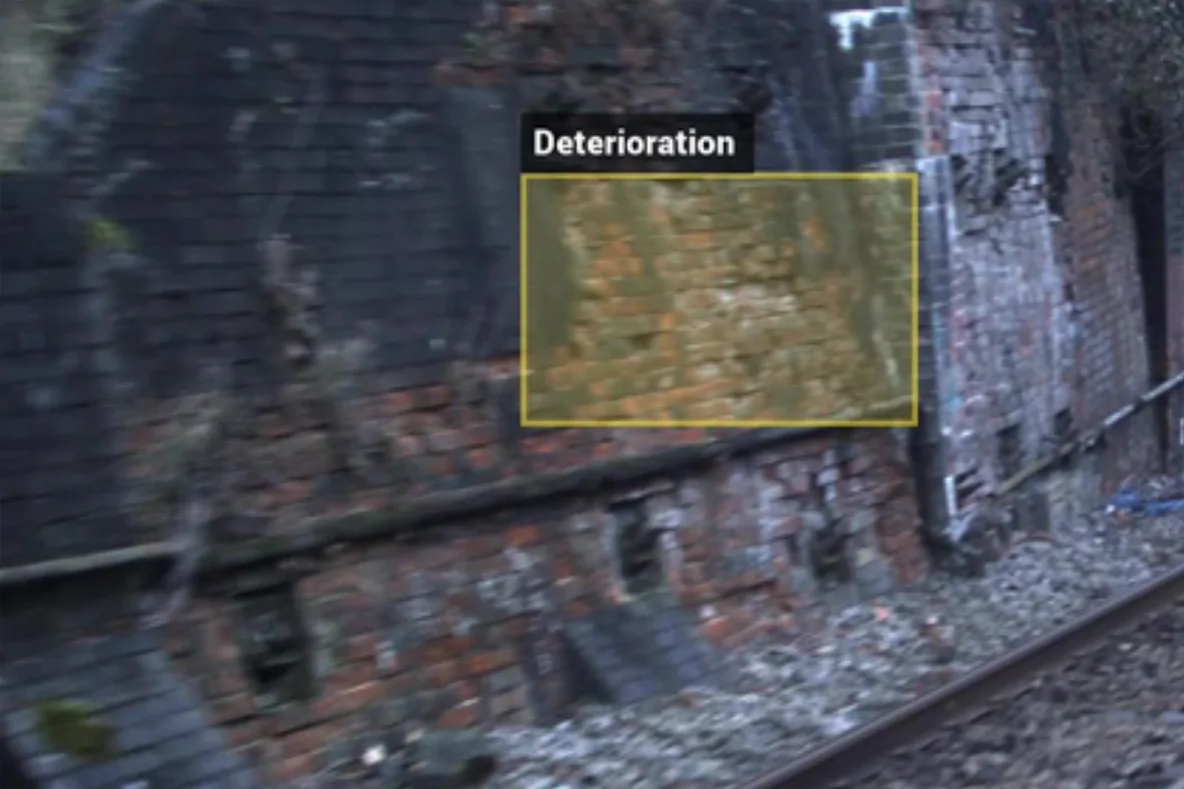
Remote review of structures on the AIVR Platform – enabling early intervention before structural issues escalate into safety hazards.
Vegetation Management
AI-powered vegetation encroachment detection identifies encroachment along the corridor, obscuration of signals and signage, overhanging vegetation, and risk-based prioritisation of areas needing intervention. Locations are pinpointed and mapped, with high-risk areas flagged for priority action. Comprehensive route history enables trend analysis, and findings can be exported as imagery and in an Excel sheet for reporting and resource planning. Preventative vegetation management also reduces the risk of low adhesion events in autumn, reducing leaves falling on the track.
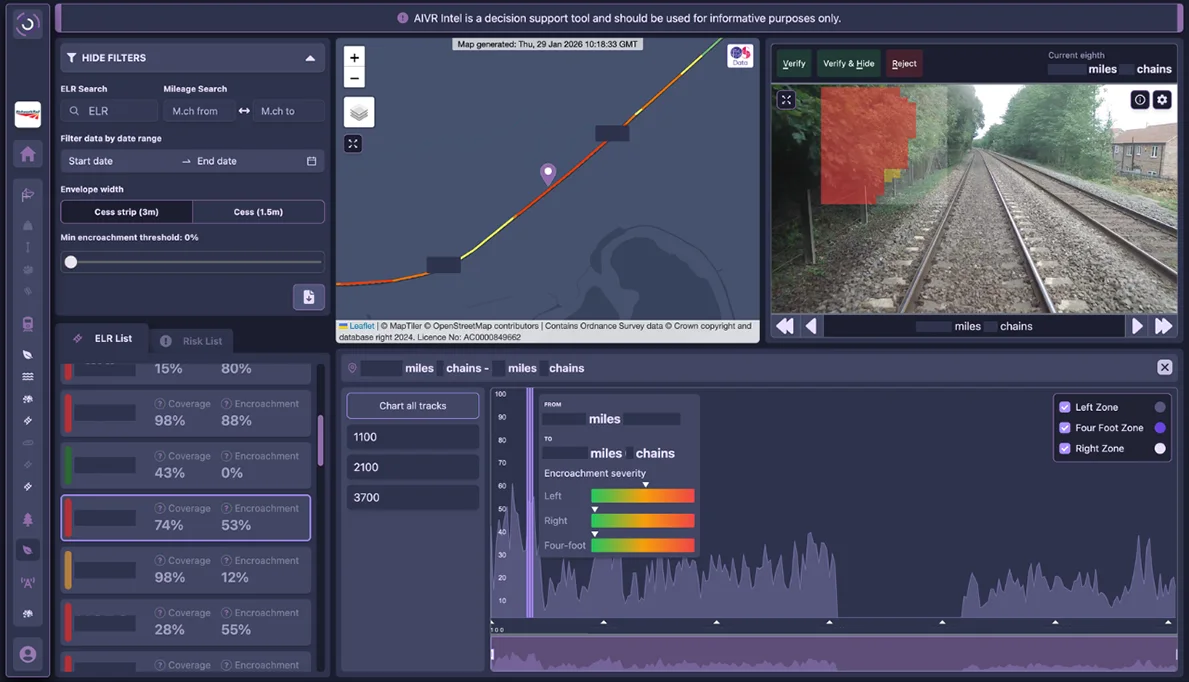
Vegetation encroachment detected on AIVR – AI-powered monitoring identifies growth along the corridor, flagging high-risk areas for priority intervention.
Virtual Asset Survey
Automated asset detection and mapping reduces the need for trackside visits. Machine learning detects and classifies signage, troughing, catchpits, limited clearance locations and more, for efficient review.
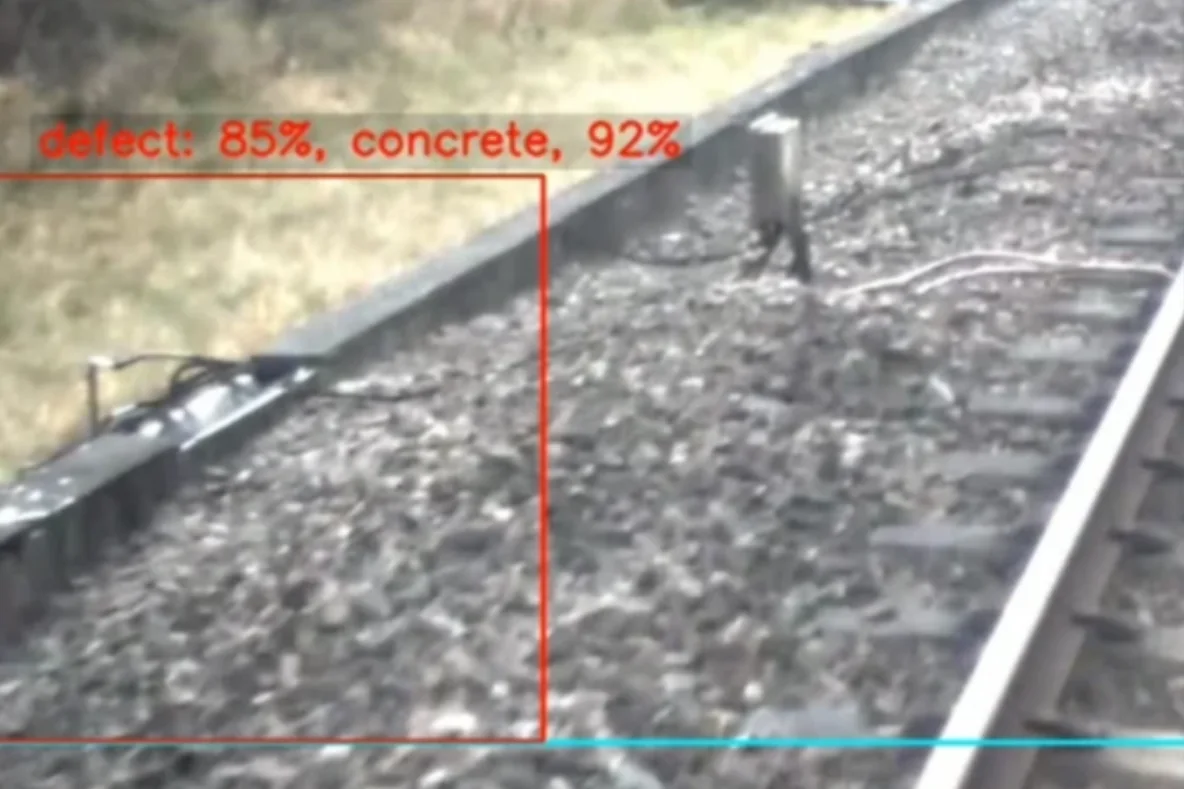
Troughing condition assessment on the AIVR Platform – automatically detected and monitored remotely, identifying deterioration before it requires emergency intervention.
Obstructions and Hazards
Machine learning detects lineside obstructions such as ballast bags, scrap rail, and vegetation obstruction, supporting proactive management and reducing the risk of undetected hazards developing into safety incidents. The safe cess tool can be applied to see if obstructions are within the safe cess area, and proactive measures can then be taken.
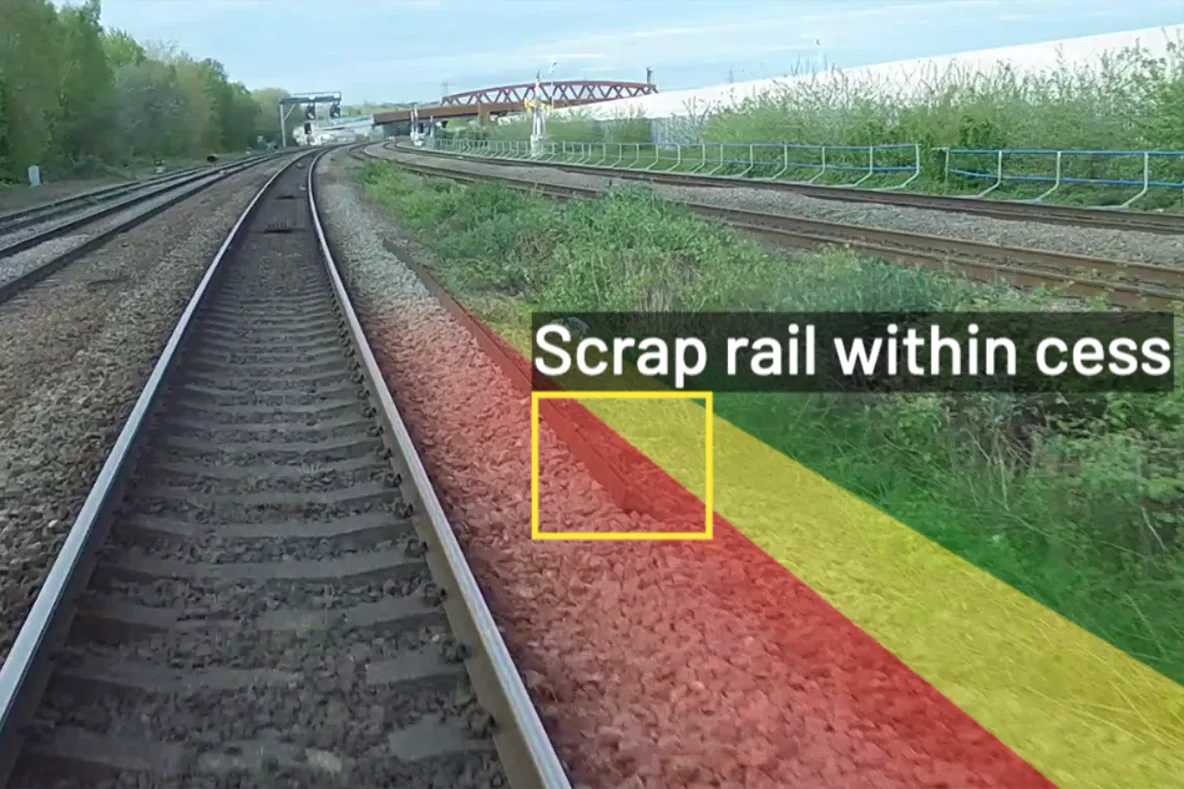
Scrap rail detected within the safe cess on the AIVR Platform, supporting hazard assessment remotely.
Works Planning Support
When site attendance is necessary, preparation makes a significant difference to the safety of everyone involved. Before anyone steps onto the railway to carry out lineside work, online inspection gives planners the ability to review the exact location remotely – identifying access points, verifying safe walking routes, and annotating hazards.
That information can be exported and shared with the full team ahead of attendance – ensuring everyone arrives informed, prepared, and clear on the risks they face. Safe working areas can also be exported directly for safety documentation, supporting compliance and briefing requirements without a preliminary site visit.
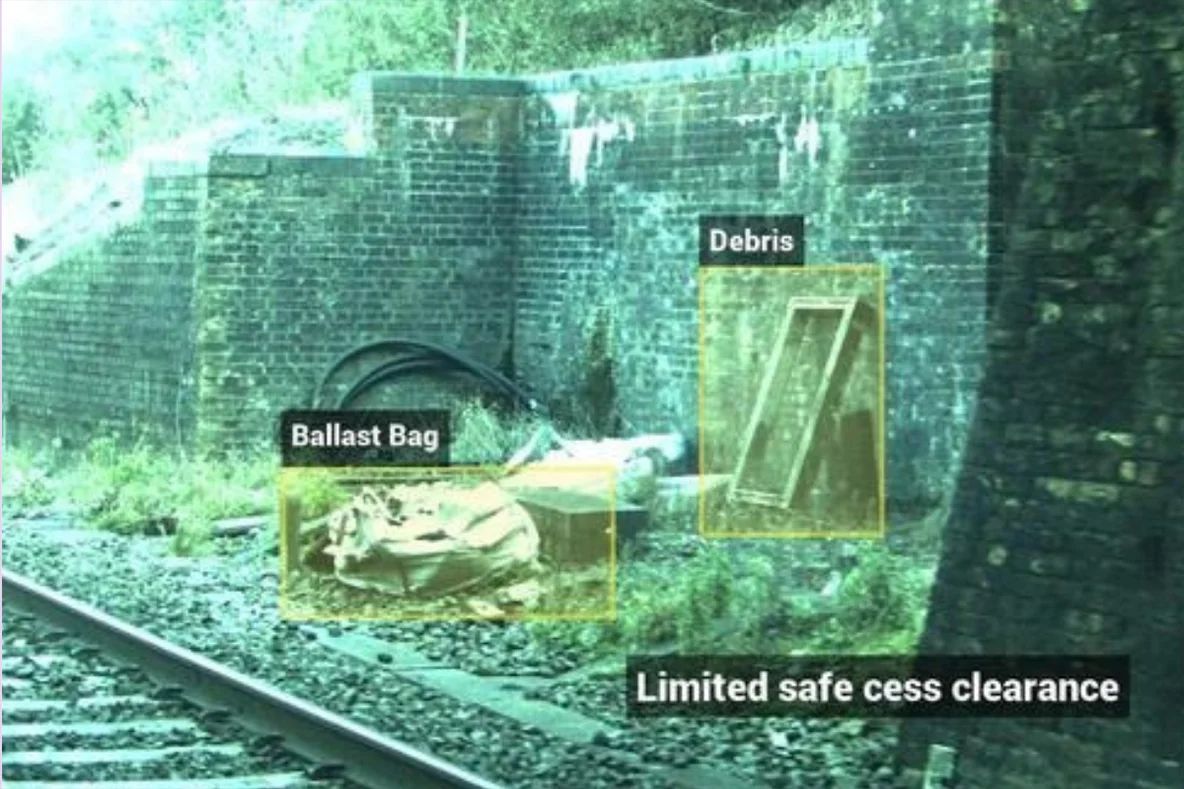
Lineside obstructions annotated, supporting proactive hazard management before teams attend site.
Beyond individual surveys, continuous lineside monitoring builds an evidence base that supports longer-term decisions, from targeted maintenance programmes to infrastructure renewals, helping to keep the network working safely and effectively for everyone using the railway.