CASE STUDY
South Western Railway
Preventing Train Delays with AIVR Thermal and Visible Monitoring
Project Overview
One Big Circle deployed AIVR (Automated Intelligent Video review) camera systems on South Western Railway’s Class 450 ‘Hotshot’ train in collaboration with Network Rail, Angel Trains, Siemens, and dg8 Design. This year-long trial provides continuous, intelligent monitoring of track infrastructure across London, Surrey, Hampshire, Berkshire, and Dorset.
The trail is already proving successful with AIVR detecting a conductor rail fault, which enabled rapid action and fixing within 48 hours, without impacting passenger journeys – Network Rail had reported that a similar incident caused 2,500 minutes of delay.
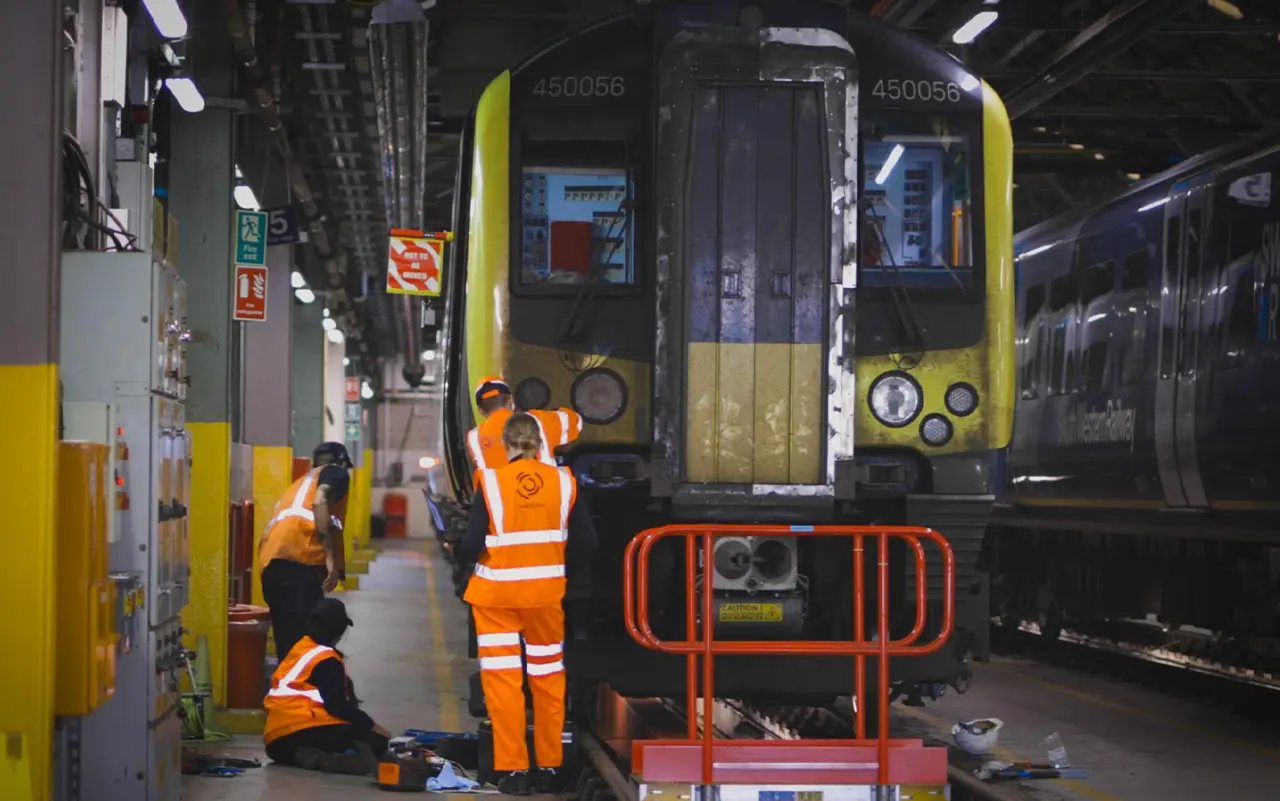
Engineering teams fitting AIVR camera systems to Class 450 train number 450056 during the installation process.
The Challenge
South Western Railway experienced significant passenger disruption as a result of conductor rail and infrastructure faults on the network. Traditional track inspection methods rely heavily on physical site visits, limiting the ability to detect issues before they escalate. On average, conductor rail faults cause around 200 minutes of delay, with severe cases resulting in over 2,000 minutes of disruption.
The Solution
The ‘Hotshot’ train was installed with three specialist AIVR systems on train 450-056:
AIVR Thermal – Detecting Overheating Assets
Award-winning thermal imaging technology mounted on the front of the front of the train captures thermographic video that automatically identifies overheating assets and potential electrical failures. The system automatically detects thermal faults and tracks hotspot conditions over time, enabling predictive maintenance.
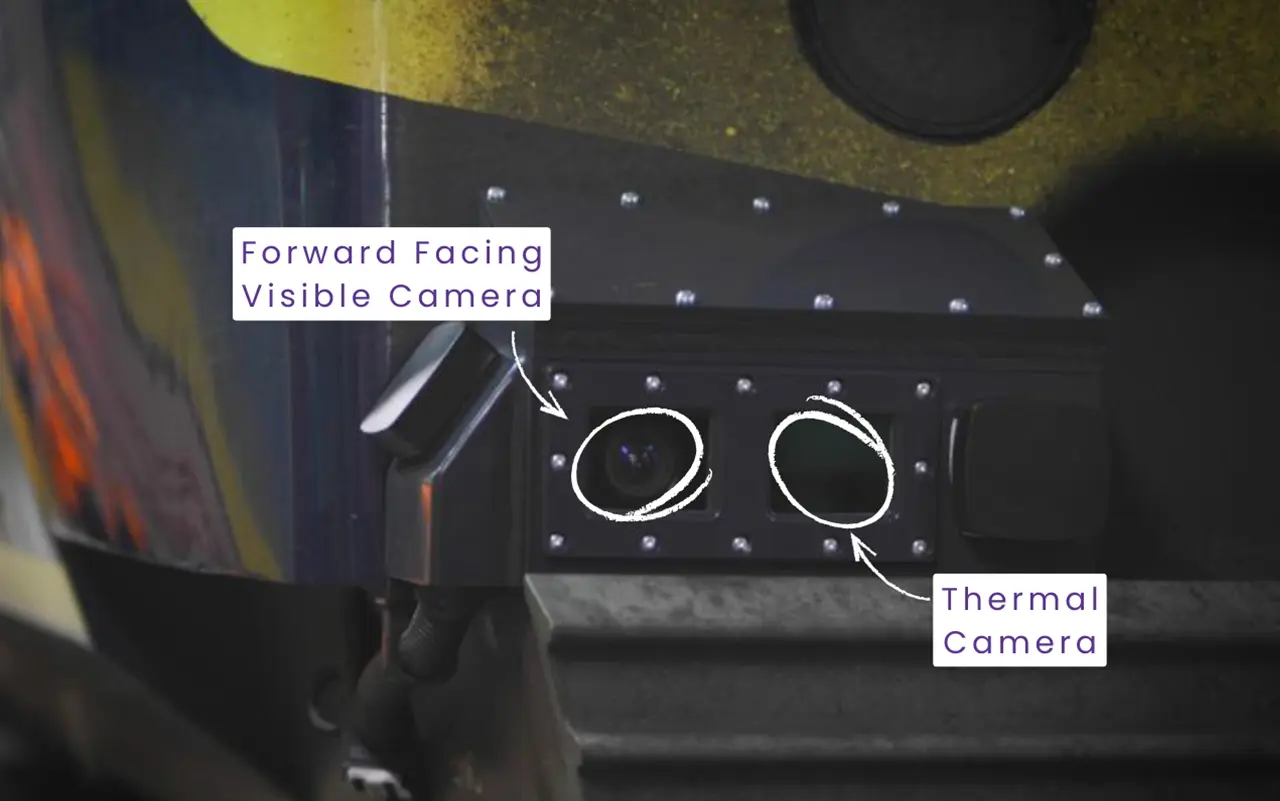
Forward-facing visible and thermal cameras mounted at the front of the Hotshot train.
AIVR FFV – Forward Facing Video Cameras
HD forward-facing visible cameras record detailed video of the track and lineside environment, providing essential contextual imagery for assessing thermal anomalies and enabling comprehensive infrastructure inspection.
AIVR Shoe – Monitoring Conductor Rail Power Supply
Two undercarriage cameras positioned on both sides of the train capture high-definition video of the interaction between the shoe gear and third rail, enabling remote inspection of the conductor rail power supply system.
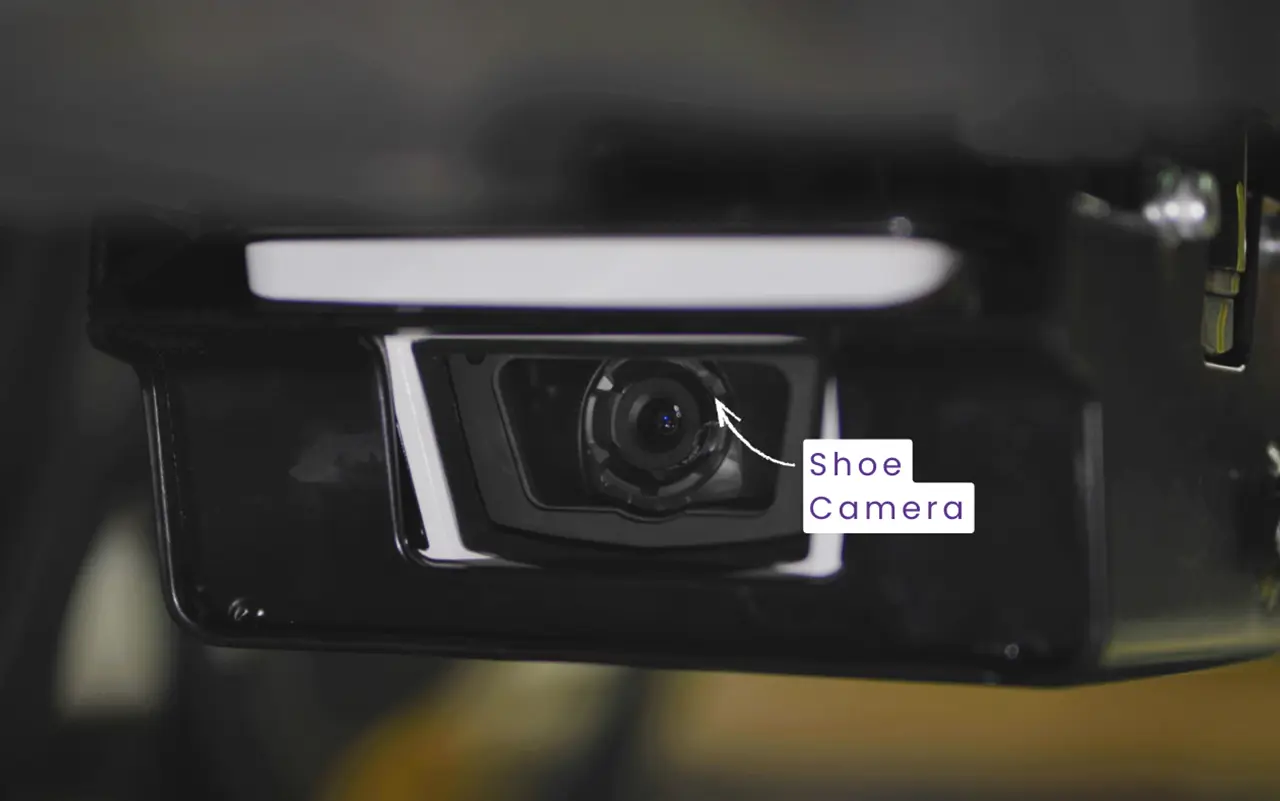
AIVR Shoe camera positioned underneath the train to monitor the critical interaction between shoe gear and third rail.
The AIVR Platform: Remote Inspection
All data captured by the AIVR systems is made available safely online on the AIVR Platform, trusted by over 13,000 rail professionals. Engineers can review data captured by SWR’s ‘Hotshot’ train and compare video for a complete picture, conducting comprehensive inspections from their laptops without needing to attend the site.
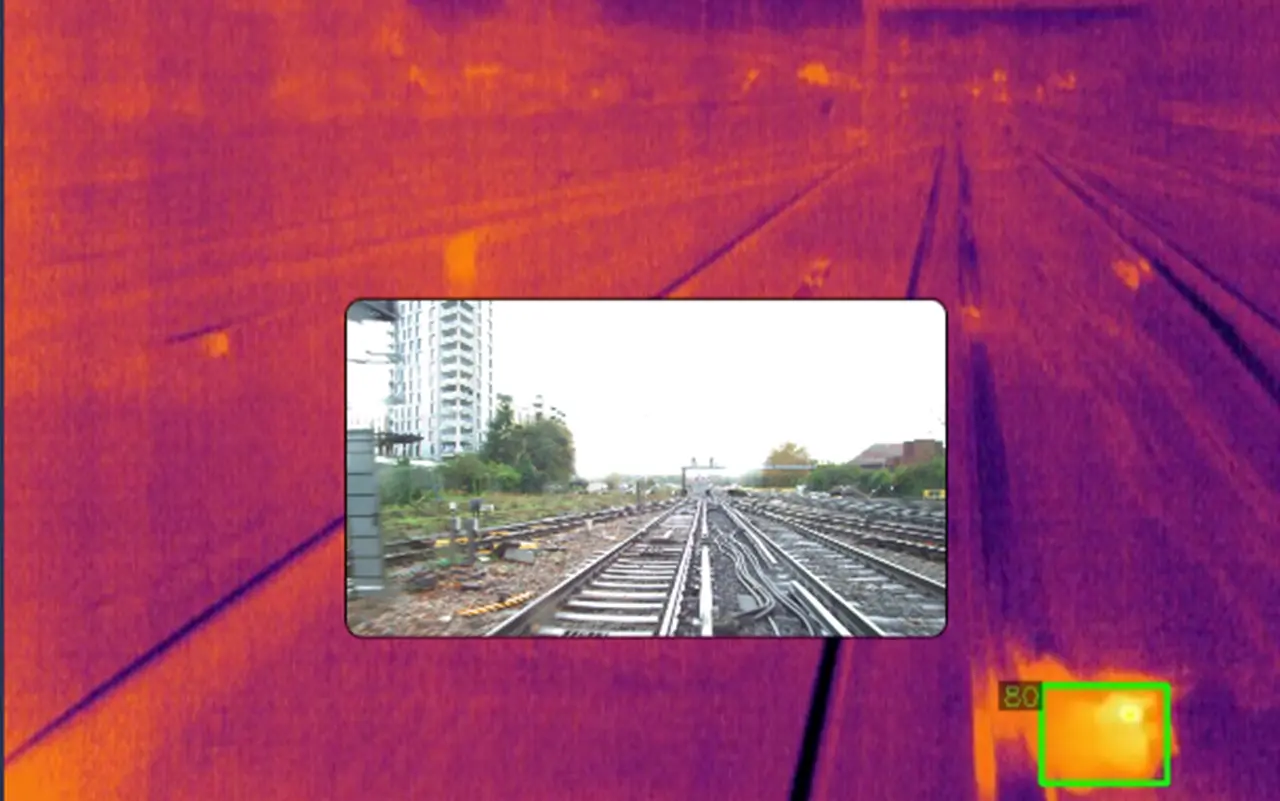
The AIVR Platform displaying side-by-side thermal and visible footage, enabling engineers to identify and assess infrastructure issues remotely.
Remote Inspection Capabilities:
- Side-by-side video comparison of thermal, visible, and shoe footage
- Automated hotshot detection using machine learning algorithms
- Automatic email alerts for temperature exceedances with precise network locations
- Geographic risk mapping with categorised risk levels
- Digital inspection tools including distance measurement, annotation, and signal sighting reports
- AI-powered asset detection identifying lineside structures and conditions
- Automated data sharing with Network Rail and stakeholders
This transforms routine infrastructure monitoring from physical site visits into effective desktop review activities.
Results
Within the first day of the trial, AIVR identified a conductor rail fault near Ashtead, Surrey, which was rectified within 48 hours with zero impact on passenger journeys – preventing a potential 2,500 minutes of delay based on similar previous accidents.
The system has proven particularly effective at preventing conductor rail faults by predictively identifying components at risk of failure. Teams can act before potential fires on the track corridor, reducing both safety risks and significant reparative costs associated with thermal failures.
If the trial proves successful, AIVR technology could be rolled out across additional trains in the SWR fleet, further expanding network coverage and reliability.