15/06/2026
Smarter Track Inspection for a Safer Railway: Day 1 of Rail Safety Week 2026

Why Track Inspection is a Safety Challenge
Starting off Day 1 of Rail Safety Week with a topic central to railway safety: track inspection.
The UK rail network spans almost 20,000 miles of track – covering plain lines, switches and crossings, joints, and everything in between. Every mile of it needs to be inspected regularly: examining the rails, joints, sleepers, and ballast for any defects; monitoring the condition of switches and crossings; identifying seasonal risks across track componentry such as leaf fall or contamination. The reason that this task of track inspection is so critical is because it helps to prevent serious incidents occurring on the UK networks such as derailments and ultimately allows passengers and freight to travel to their destination safely and on time.
Completing these track inspections across the UK network is a mammoth undertaking, and has involved putting people on track, in a high risk environment. Increasingly these inspections are taking place overnight and often in poor weather, which is a challenging environment for the engineers, inspectors and maintenance teams.
Adding to these already challenging inspections is the ageing infrastructure. With many of Britain’s rail assets having been in place for decades, the components are worn and deteriorating quicker. As these assets age, the frequency and complexity of the inspections and interventions required only increases. Constrained renewal budgets mean that more of the network is being maintained and life-extended rather than replaced outright, placing even greater importance on identifying defects early, before they become critical.
The consequences of an unknown defect can be severe. A cracked or broken rail, failing joints and damaged fishplates – all compromise the integrity of the track in its most vulnerable places. Worn switches and crossings, already known to be among the most complex and high-risk assets on the network, can deteriorate rapidly under the stress of heavy traffic. Low ballast reduces the stability of the track bed, affecting alignment and increasing the risk of settlement or movement under load. And during autumn, low adhesion caused by leaf fall and contamination creates dangerous braking conditions. These are the kind of failures that cause incidents, disrupt services, and can put lives at risk.
How Virtual Rail Inspection is Increasing Safety
Advances in train-borne monitoring technology such as AIVR mean that track inspection no longer has to involve putting people on the track. By fitting cameras to trains already in service, as well as inspection and maintenance vehicles such as VIU’s (Visual Inspection Units) and UTU’s (Ultrasonic Test Units), engineers can now access high-resolution imagery of the track captured, automatically transmitted and ready to review remotely.
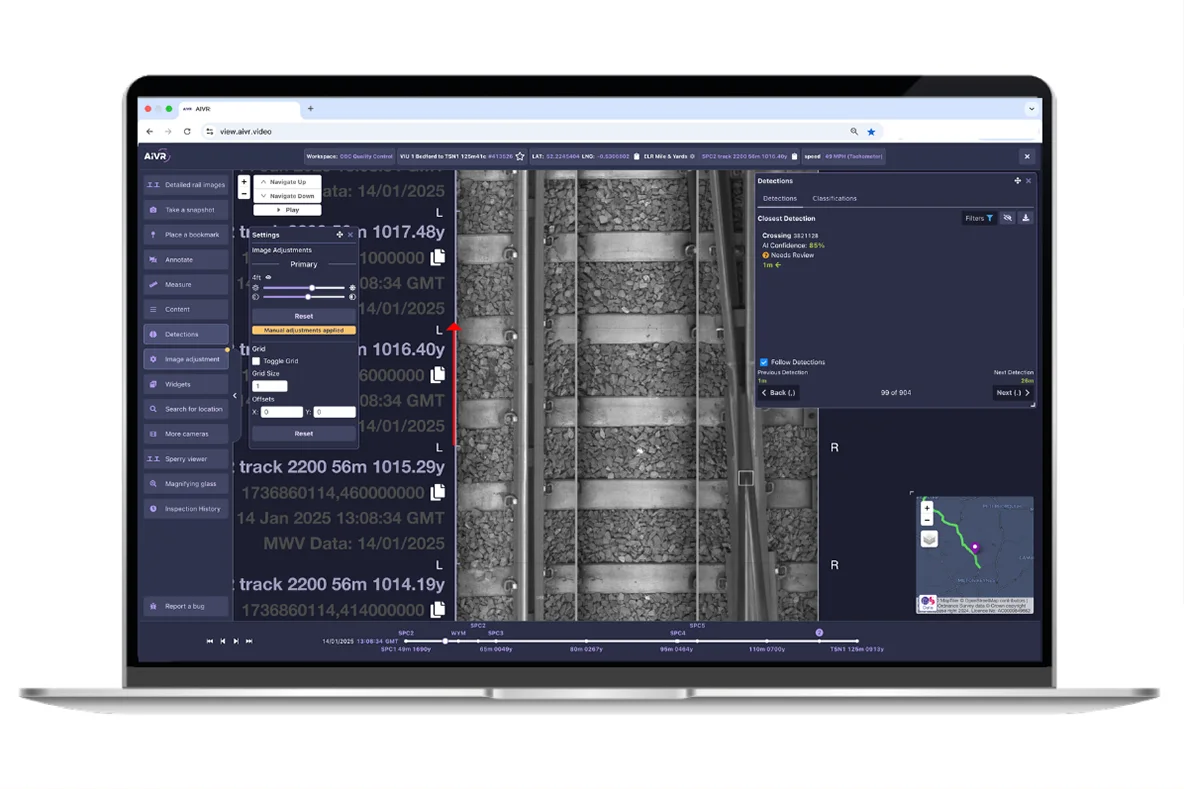
Remote track inspection on the AIVR Platform – reviewing high-resolution track imagery, automated detections, and precise location data without stepping on the track.
Cameras are configured and tailored to the level of detail required, with options capturing railhead imagery, extending to include the sleeper and inner web of the running rail, and further still to the outer web. These cameras capture high-definition imagery from a single pass at speeds of up to 125mph. Forward-facing video adds another context, supporting identification of conditions such as low ballast along the route.
Machine learning analyses footage continuously, identifying defects and flagging their precise locations. Combined with seasonal monitoring campaigns, this enables teams to identify likely deterioration and respond before components fail – rather than reacting after the fact. Footage can also be compared across weeks and seasons, allowing teams to monitor developing faults over time and plan maintenance before issues become critical.
Capabilities Across the Track
The range of defects and conditions that can now be identified remotely is significant:
Critical Defects
Broken rail, cracked and broken joints, missing clips and missing bolts – identified automatically by machine learning with GPS-precise locations for rapid response.
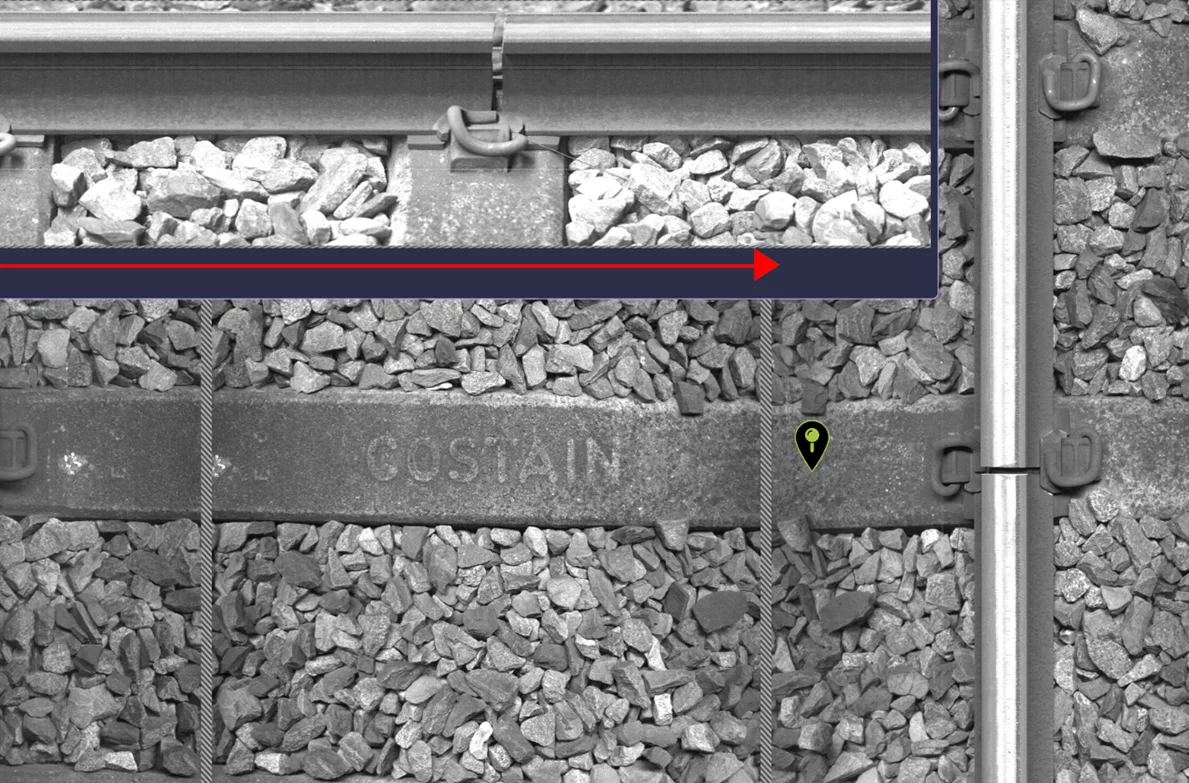
AIVR detects broken rails through AI-powered analysis, enabling rapid response to critical safety hazards.
Railhead Condition
Contamination, surface damage, squats, and corrugation – detected and reported for targeted maintenance planning.
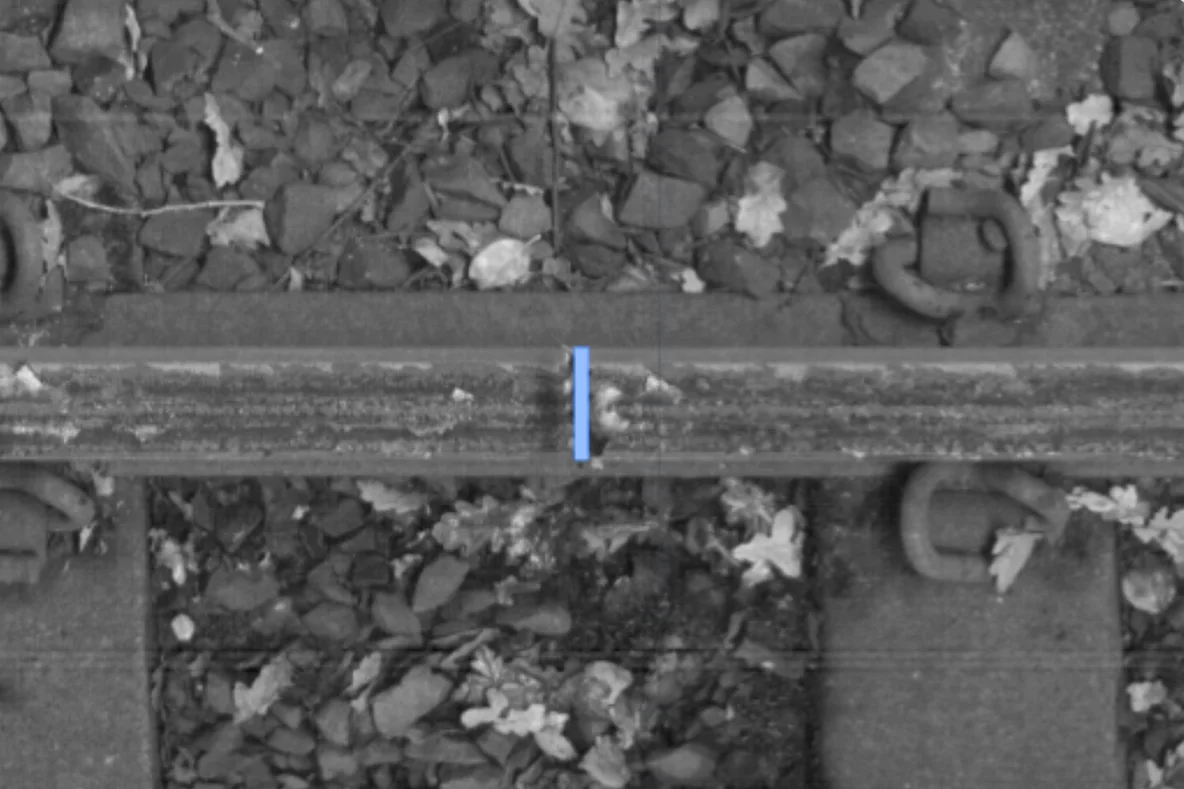
Track contamination identified remotely on the AIVR Platform –supporting proactive adhesion risk management without trackside exposure.
Ballast Condition
Wet beds, voiding, and low ballast — assessed remotely to support drainage and formation maintenance planning.
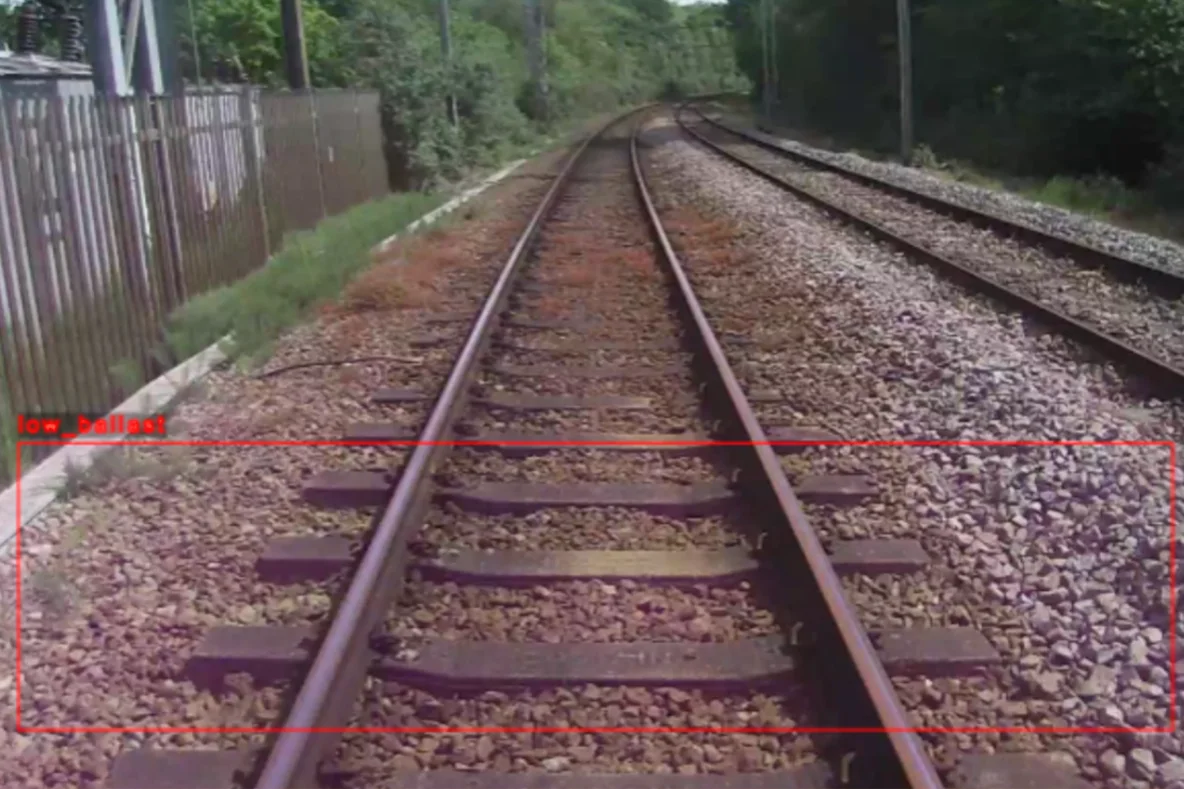
Remote identification of low ballast on the AIVR Platform – supporting proactive maintenance planning without trackside exposure.
Joints and Welds
Thermite welds, joint types, and joint gap measurements – monitored to identify developing issues before they become critical.
Switches & Crossings
Adjustment switch gaps, sleeper condition, and crossing health – with dedicated inspection interfaces.
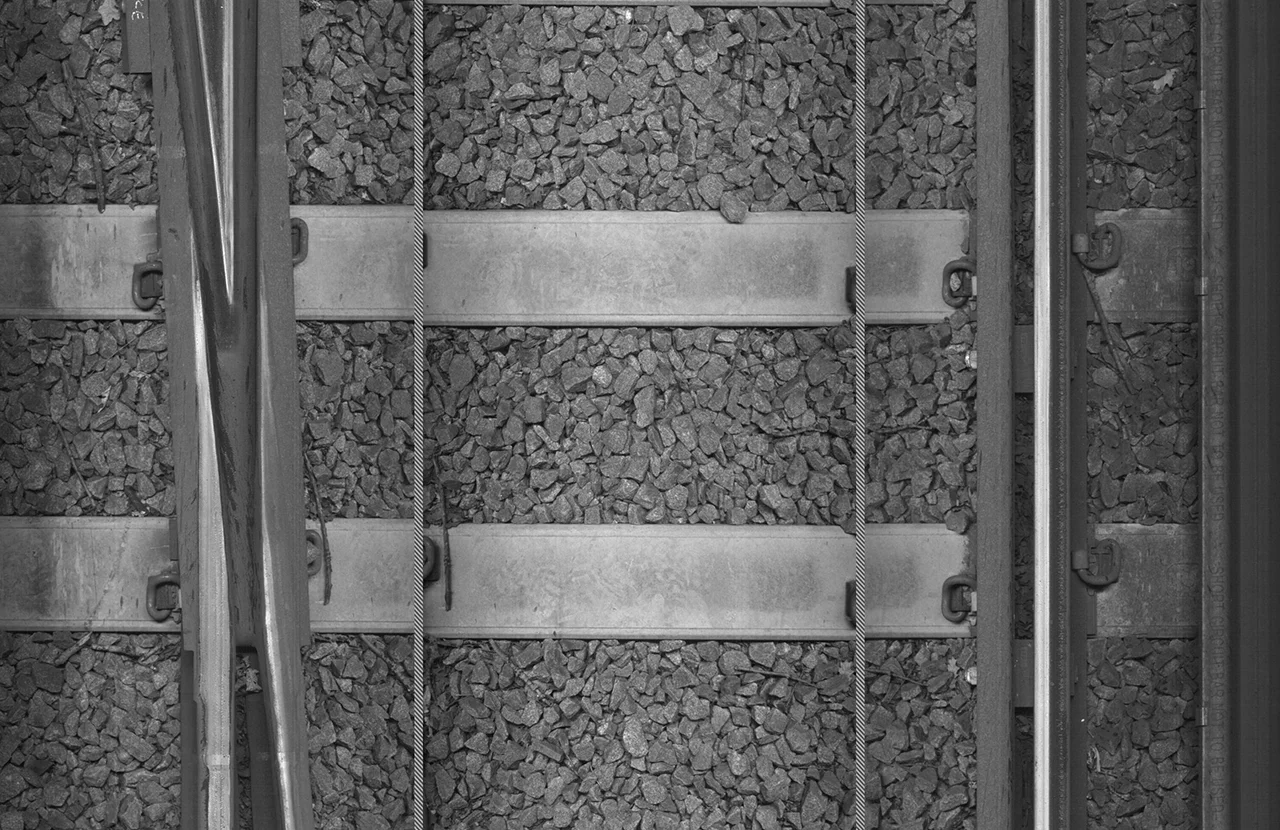
Switches and crossings condition monitoring on the AIVR Platform, identifying wear and deterioration early.
All detections are exportable from AIVR – defect data, annotated imagery, and maintenance reports shared directly with infrastructure owners and maintenance teams for rapid, targeted response.
The Full Picture of Track Health
Alongside line-scanning inspection, track geometry helps to build a complete picture of track health – measuring parameters such as twist, top, alignment, gauge, crosslevel, curvature, and cant deficiency. A rail can look intact but be gradually moved out of alignment, for example, creating conditions that affect ride quality, increase wear, and ultimately end up compromising safety.
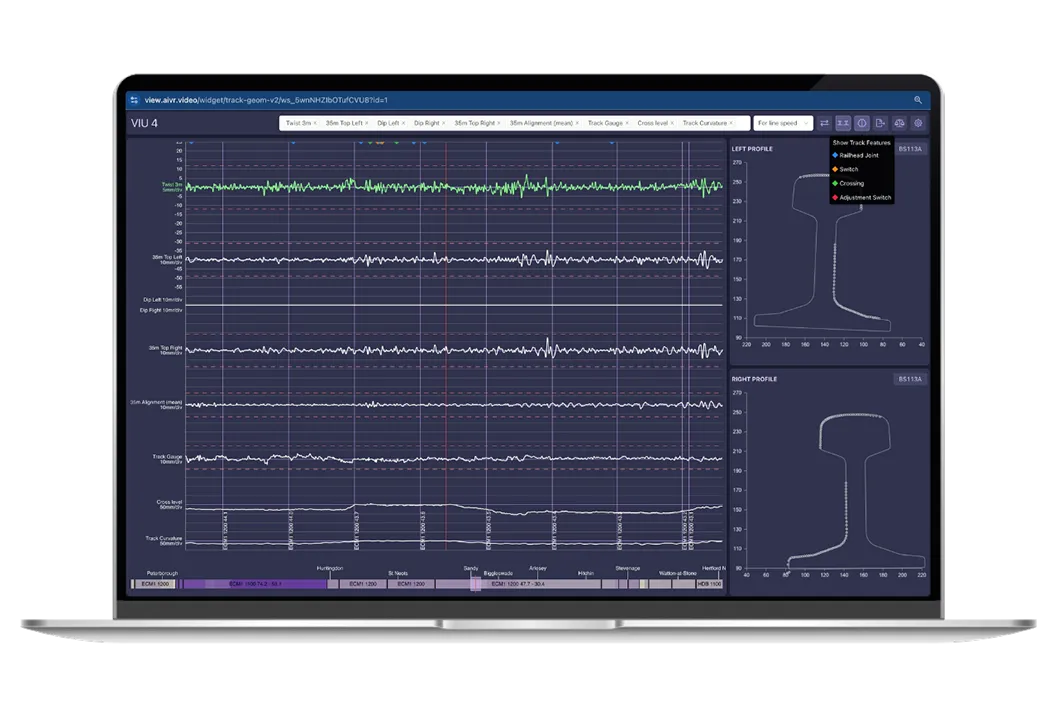
Track geometry analysis on the AIVR Platform –high-precision measurements of twist, alignment, gauge, crosslevel and more.
The bogie-mounted, laser-based AIVR Geometry System now captures these parameters automatically at 240 measurements per second. The high-precision geometry data it captures is synchronised with line-scanning imagery to correlate visual defects with geometry anomalies. For example, dip angles are automatically matched with nearby joints for condition assessment, and half rail profile measurements are matched with identified rail sections e.g. bullhead or flat bottom.
Combined with line-scanning cameras identifying issues on track, this layered approach gives infrastructure teams the evidence they need to make confident, data-driven maintenance decisions, and to intervene before issues become critical.
Preparing Track Workers for Safer Site Visit
Attending a site to fix track issues is unavoidable. How well prepared a team is when it arrives makes a significant difference to its safety. Digital review tools support hazard identification, site assessment, and scrap rail mapping ahead of any visit – enabling more thorough works planning and reducing the need for preliminary site visits.
Forward-facing video gives planners the ability to review the exact site of work remotely before anyone steps on the track. Teams can familiarise themselves with the environment, identify access points and safe walking routes, check cess boundaries, and annotate footage with hazard notes – all from a desk. That information can then be exported as video clips, imagery or PDF reports, and shared directly with teams ahead of site attendance.
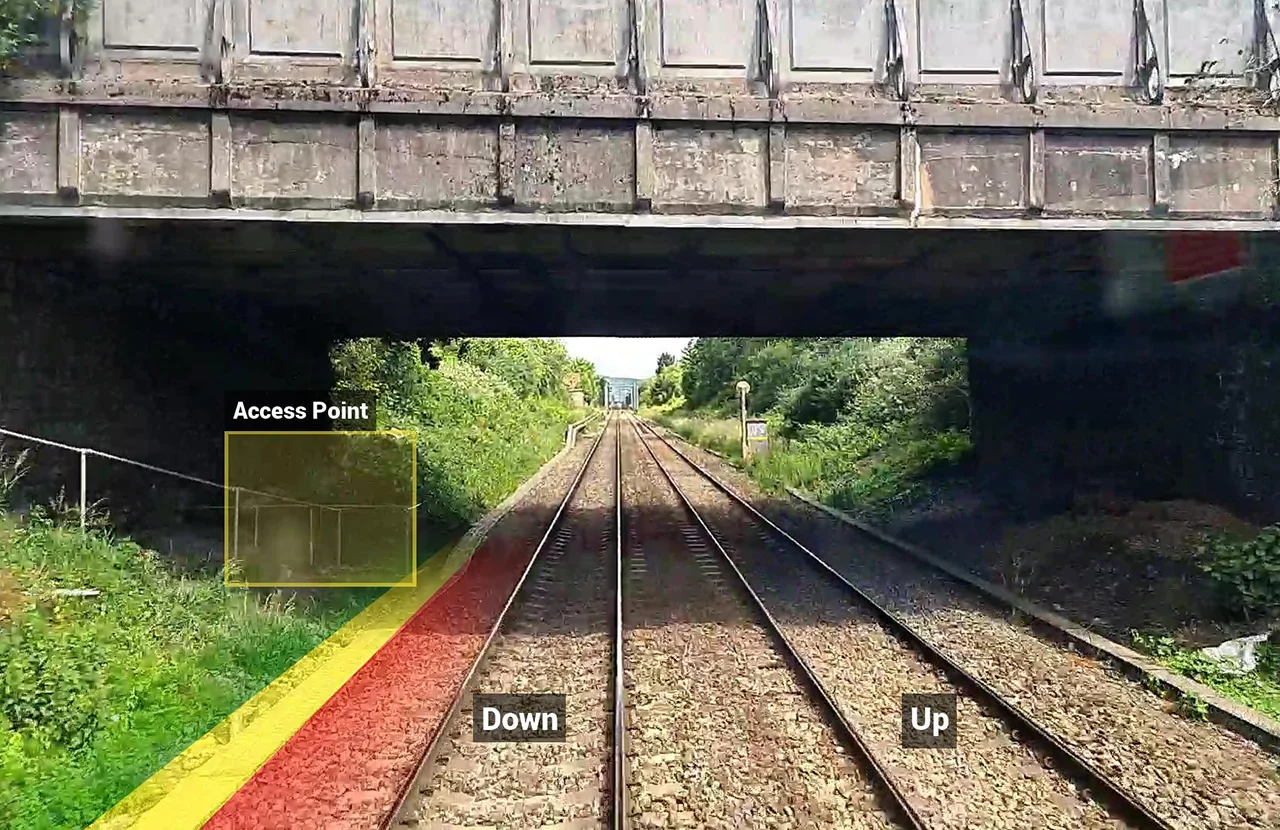
Pre-site planning on the AIVR Platform – forward-facing video with hazard annotation, access point identification, and safe walking route overlays, all reviewed remotely before any team steps on the track.
By reviewing faults remotely, teams also arrive on site already familiar with the issue they are attending to, reducing surprises and supporting a more controlled, confident response.