30/09/2026
Fitting AIVR Into Your Existing Railway Operation

New technology in the rail industry can be seen as complex and burdensome – requiring whole new systems and rendering existing technology redundant.
AIVR (Automated Intelligent Video Review) is the zero hassle alternative for railway infrastructure inspection and monitoring. This innovative, end-to-end technology solution is designed to work flexibly around an operator’s existing fleet and technology architecture, with minimal upheaval.
AIVR is installed on in-service and maintenance trains already running on networks across the globe – including Southeastern Railway, South Western Railway, Avanti West Coast, Transport for Wales, and various Network Rail maintenance fleets, among many others. It captures infrastructure data as part of a train’s normal operation. Then it transmits Video, imagery and geometry data automatically to the cloud, for remote inspection through the AIVR Platform.
Where cameras are already installed on a vehicle, AIVR integrates directly with that existing technology. Where they’re not, a range of permanent or temporary installation options means each deployment can be shaped around the project. Close partnership is central to this. OBC works with operators, ROSCOs, train builders and designers, suppliers and other infrastructure monitoring providers, so that AIVR fits around the vehicles and systems already in place. AIVR can also take in data captured by other companies and systems entirely, accepting alternate feeds in a shareable format even where there’s no direct link between systems, so inspection data from across an operation’s wider supply chain can still be brought into one place for review.
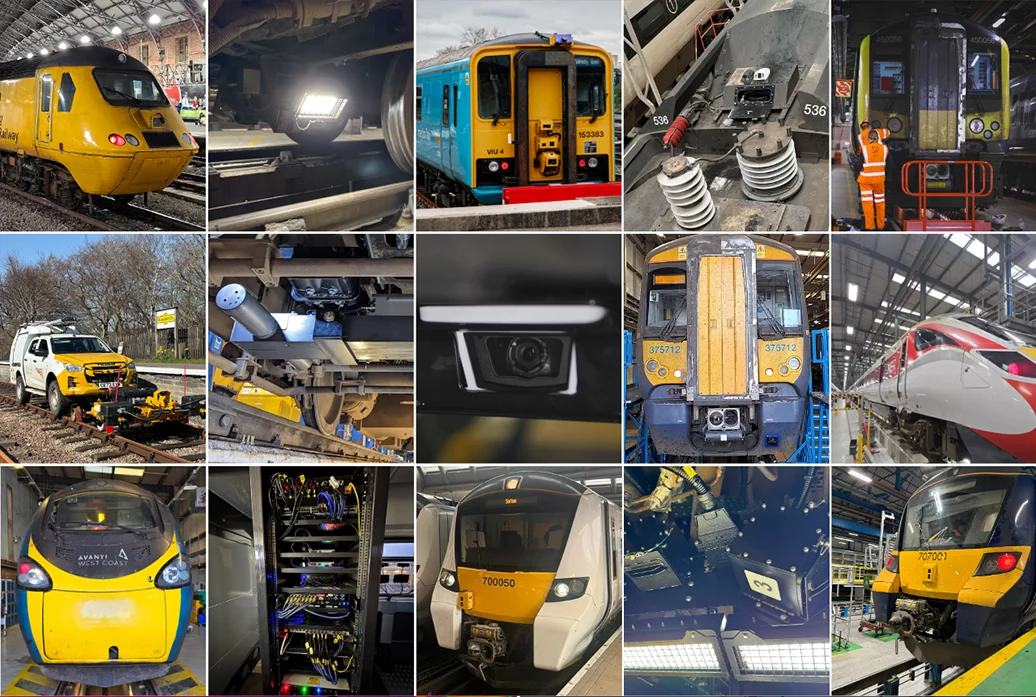
AIVR in service across the network — installed on a wide range of operator and maintenance fleets, from cab cameras to underbody sensors.
AIVR is also available as a white-label solution – deploying and capturing data in exactly the same way, but delivered under the operator’s own technology architecture and branding.
Deploying across the fleet already running on the track
AIVR can provide data about all aspects of the rail environment. That includes:
- Video: forward-facing, lineside, overhead line, thermal and conductor shoe
- Rail inspection imagery: conductor rail, switches and crossing and plain line
- Geometry data: track alignment, rail profile and overhead line.
With AIVR’s integrated deployment, its devices link directly to a vehicle’s existing cameras through the AIVR Connect device. Drawn from sources such as GPS and local network referencing, Metadata is layered on top of the footage — from location to mileage and asset context. AIVR Connect couples this contextual data with the footage itself, transmitting automatically to the AIVR Platform via 4G/5G, while also providing edge detection for certain features.
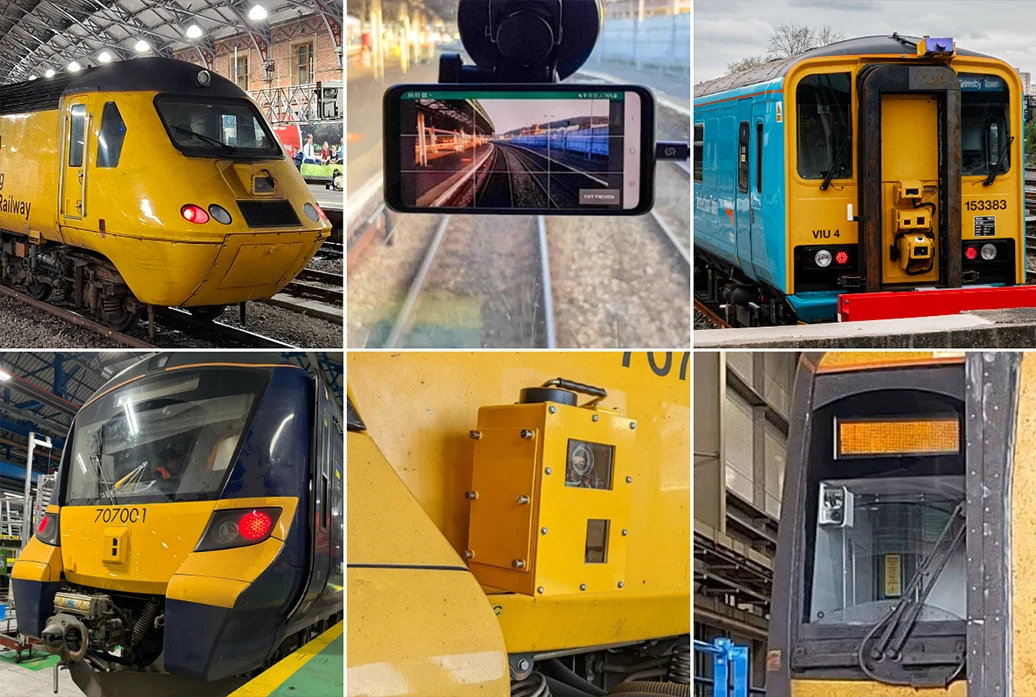
From a single portable unit to a full permanent install – AIVR scales to the project.
Where a dedicated install makes more sense, permanent or portable hardware can be installed on everything from a single trial vehicle to a full fleet. Options include:
- Forward Facing Video – permanent onboard cameras, as well as portable devices (AIVR Go and AIVR TLC)
- Thermal Video – portable tail-lamp-mounted units, or permanent installs for continuous, automated monitoring
- Overhead Line Equipment Video – fixed, permanent cameras or integration with cameras already onboard
- Line-Scanning Cameras – permanently onboard, high-resolution line-scan cameras of the rail, sleeper and conductor rail, available in 2, 5 or 7 camera configurations, depending on inspection scope
- Geometry – permanently installed, underbody-mounted optical and inertial sensors measuring track twist, top, alignment, gauge, cross level and cant deficiency
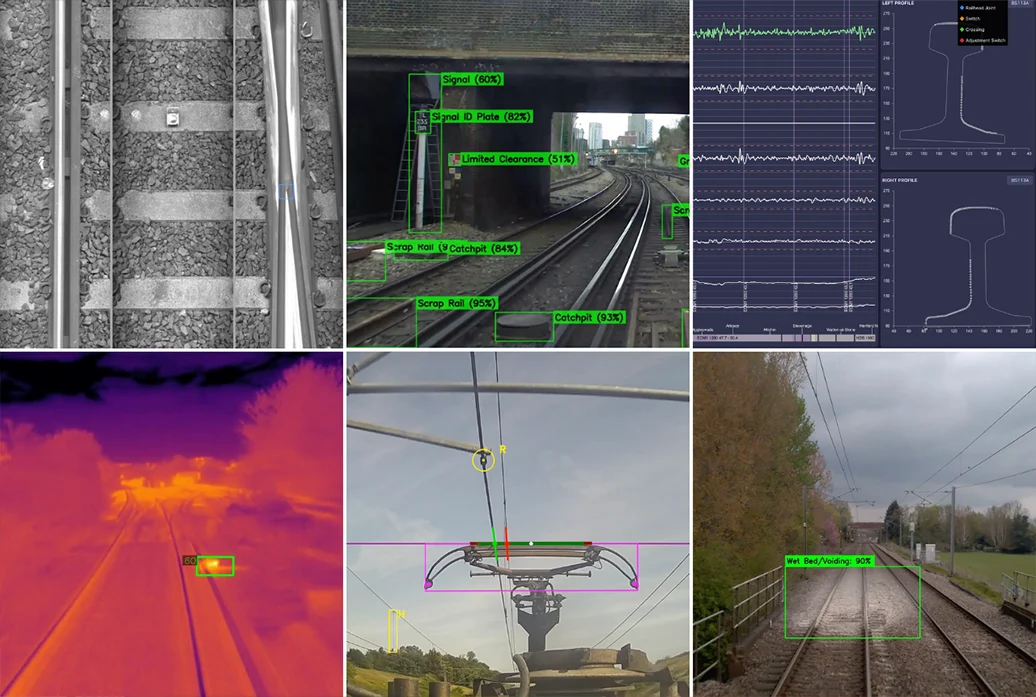
AIVR’s machine learning models cover the rail environment, mapping assets, detecting critical defects, and more, with the aim of increasing safety.
Bringing the data into one place – delivering your railway insight
Track, lineside, signalling and operational imagery has traditionally resided in separate inspections, reviewed by different teams across different systems.
AIVR radically simplifies this, bringing everything into one browser-based platform. With video and imagery synchronised against interactive mapping (GPS coordinates, route mileage, and ELR data), engineers can see exactly where assets are on the network, and monitor conditions as they arise. Map-based navigation, distance and clearance measurement, annotation, and AI-driven detections sit alongside safe work planning tools.
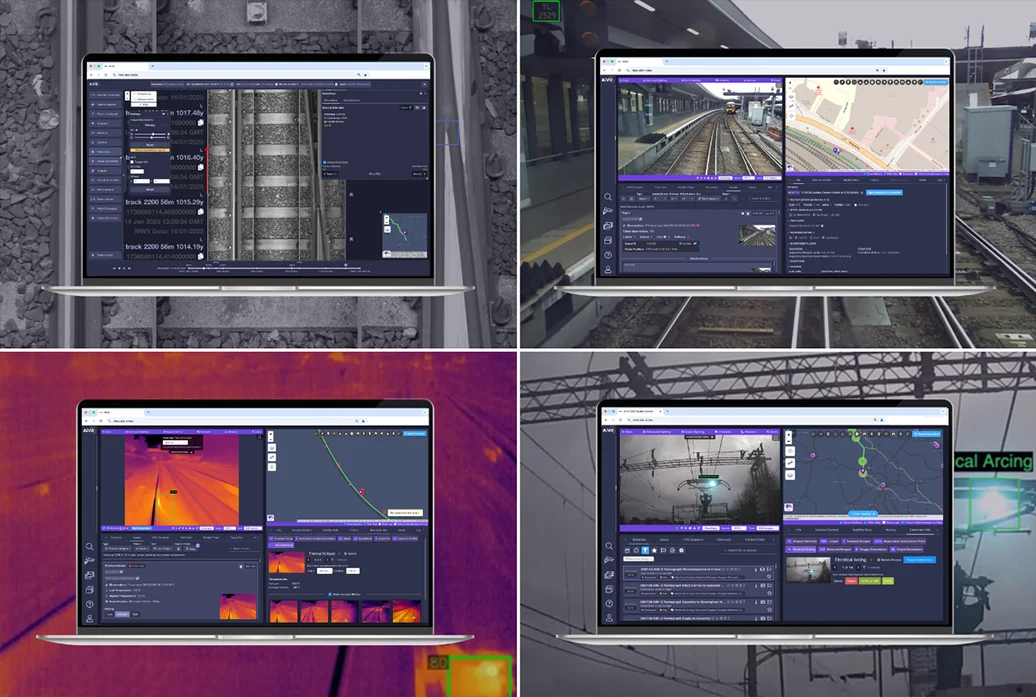
Every inspection, mapped and reviewed in one place – AIVR Platform.
When you’re ready to go, you can export plans directly into safe work packs. This way AIVR slots neatly into an engineer’s analytical and operational planning process, instead of becoming an extra system to check.
To ensure aligned workflow, AIVR integrates with external data sources and feeds AIVR outputs into the wider technology architecture an organisation already runs.