20/06/2026
Digital Transformation for a Safer Railway: Day 6 of Rail Safety Week 2026

Why Digital Transformation is a Safety Discipline
Day 6 of Rail Safety Week and we’re looking at a discipline that cuts across every part of the railway: digital transformation.
Digital transformation is reshaping how the railway is managed, maintained, and operated. Every train movement, every infrastructure inspection, every service operation has the potential to capture information that can improve safety, reduce risk, and support better decision-making. But data alone isn’t enough. What matters is whether the right people can access the right information, at the right time – and act on it before something goes wrong. For much of the industry’s history, that has been the hard part. Footage held in silos. Asset records spread across systems. Incident investigations delayed by the time it takes to retrieve evidence. Route knowledge retained in the heads of experienced drivers. Digital transformation is the process of changing that – and in doing so, it is having a direct and meaningful impact on safety across infrastructure teams and operations alike.
How Digital Transformation is Increasing Safety
AIVR brings together data from across every railway discipline into a single, secure, web-based environment, accessible to authorised users anywhere, in near real-time. Data is captured automatically during normal operations, transmitted via 4G/5G networks, and processed in the cloud, making it available for remote review without any additional site visits or manual data collection.
The platform is designed to integrate with existing systems and workflows – connecting with external hardware, asset management systems, and third-party tools, so teams can access the data they need without changing the way they work.
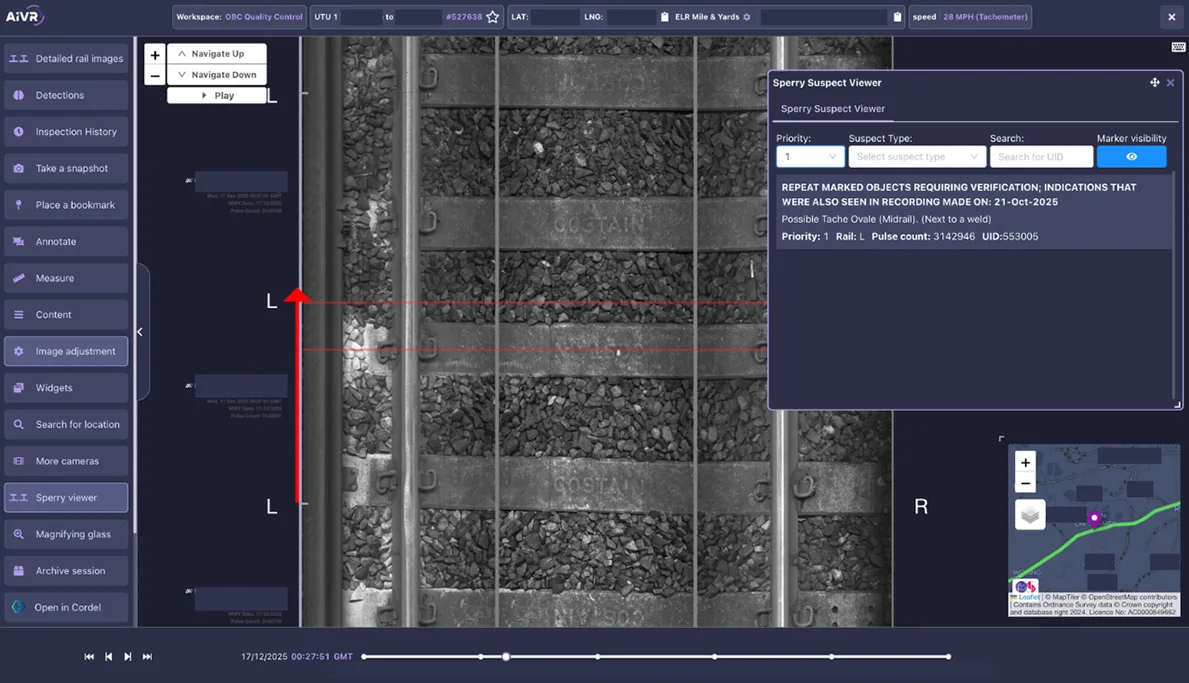
AIVR track imagery synchronised with Sperry Rail ultrasonic testing data.
Capabilities Across Digital Transformation
Incident Management
When something goes wrong on the railway, getting to the right information quickly is essential for immediate response, for investigation, and for preventing recurrence. Rapid access to footage from the incident location and time means investigation teams no longer need to wait for footage to be retrieved physically or risk arriving at a scene without the full picture. Multi-angle views, where available, provide additional context. All evidence can be exported directly for reports and investigation teams, supporting faster resolution, more thorough root cause analysis, and stronger evidence for preventing future incidents.
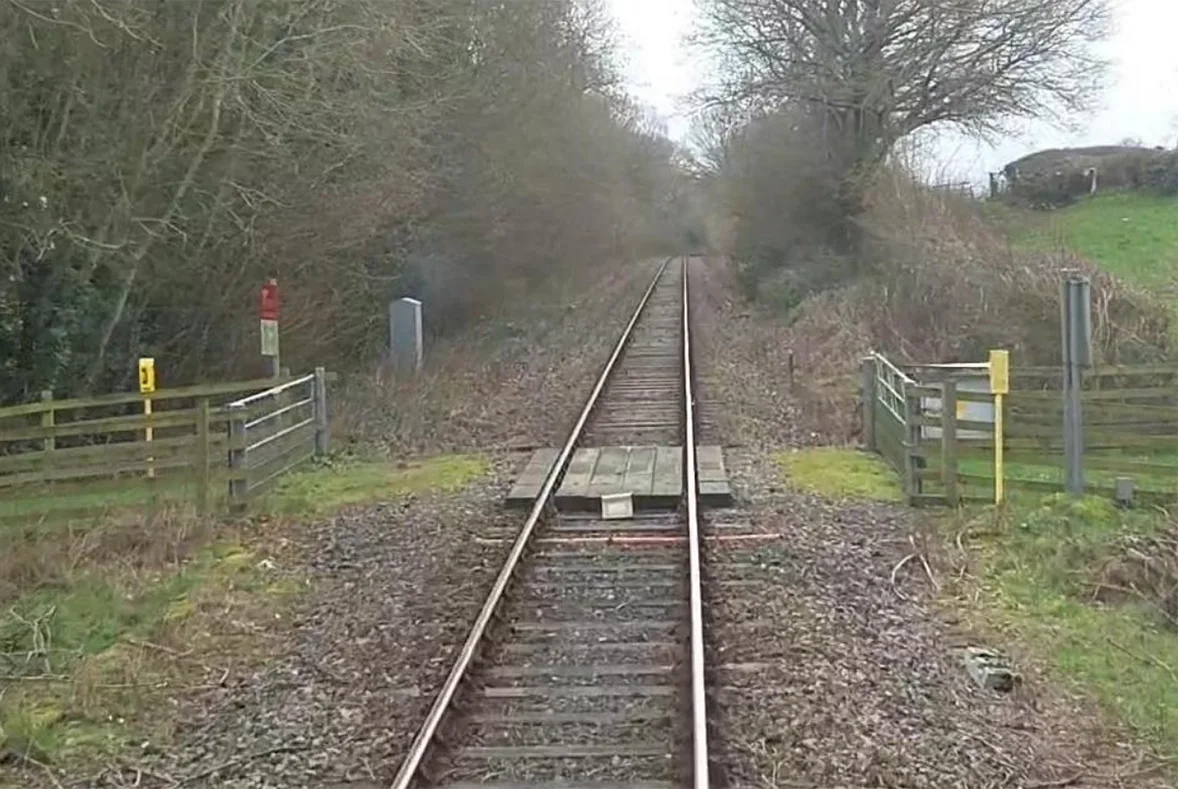
Forward-facing video provides rapid access to footage from the exact incident location, supporting faster resolution and more thorough root cause analysis.
Station Dwell Time Analysis
Visual and time-stamped data supports operational performance monitoring and improvement at stations. Platform observation during dwell periods, combined with time-stamped dwell time data and visual review, gives operators the information they need to understand exactly what is happening at the platform, identify performance issues, and make evidence-based improvements to both operations and passenger safety.
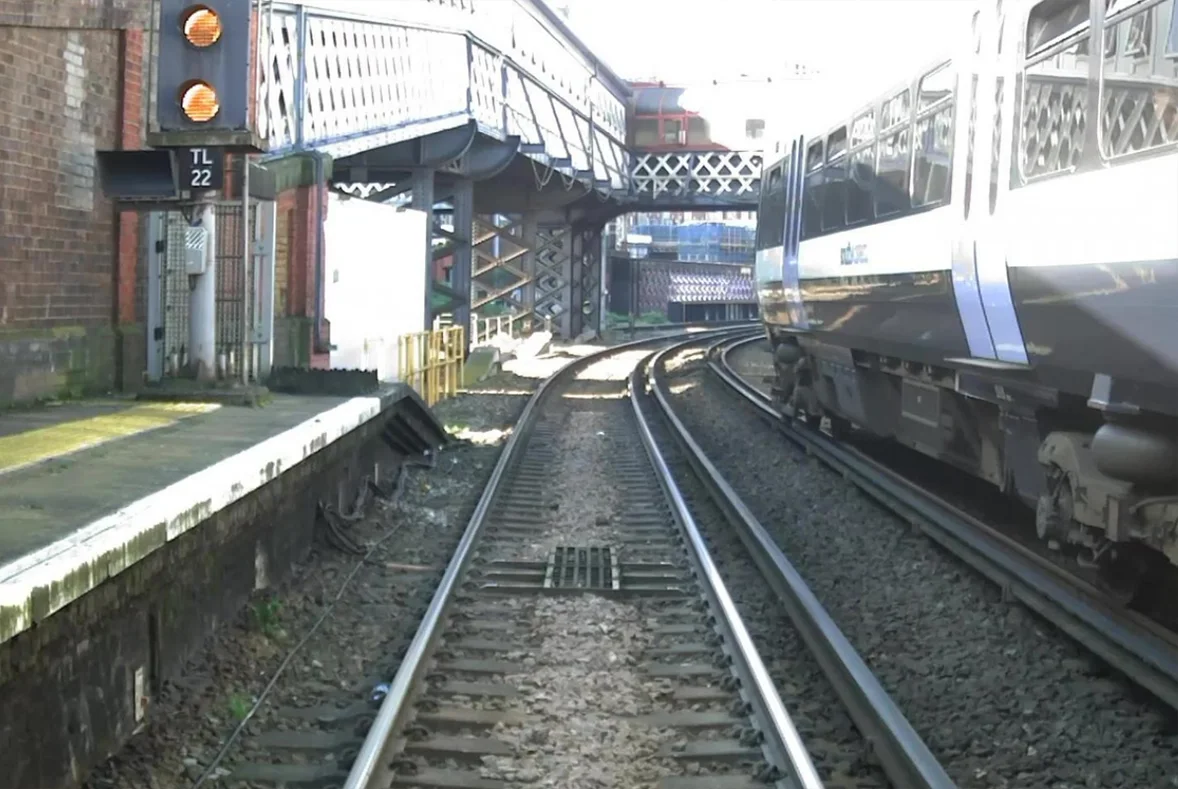
Station dwell time analysis on the AIVR Platform – visual and time-stamped footage of the platform environment during dwell periods, supporting operational performance improvement.
Route Familiarisation
Virtual route learning gives drivers the ability to familiarise themselves with routes, hazards, and signal locations remotely in the first instance. Complete forward-facing route footage is available for desktop review, supporting route learning, hazard identification, and signal sighting practice. That advanced preparation complements their training and supports safer driving on unfamiliar or infrequently operated routes.
Asset Mapping and Digital Twin
AIVR creates a comprehensive digital inventory of railway infrastructure, enabling rapid asset location and lifecycle management across the network. Access points are identified and mapped with asset data, giving teams instant visibility of safe access locations across their routes. OLE structures are automatically identified and mapped with structure IDs. Signals are mapped and searchable by asset ID, building a complete signalling infrastructure inventory. Critical assets across all disciplines, including joints, conductor rail joints, and lineside components, are identified and recorded, creating a continuously updated digital twin of the railway corridor that supports faster decision-making, more efficient maintenance planning, and a more complete understanding of infrastructure condition over time.
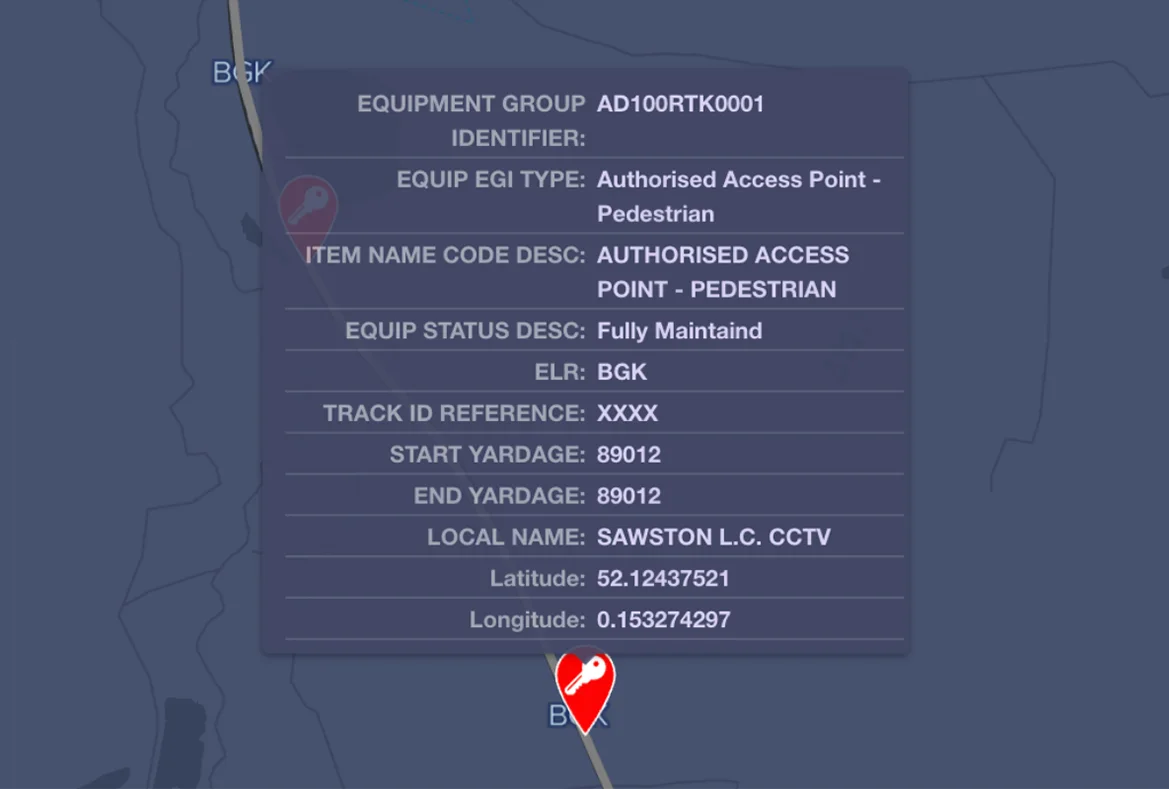
Access point asset data on the AIVR Platform – full equipment details including ELR, location, and more mapped and searchable across the network as part of the digital asset inventory.
The result is a railway where the people responsible for keeping it safe — whether they are maintaining the infrastructure or operating services on it — spend less time working with incomplete information and more time making decisions based on a clear, current, and comprehensive picture of the network they are responsible for.