13/10/2026
Autumn Roundup: New Features Ahead of the Changing Weather

Recent Highlights
Railway networks have endured some intense summer conditions this year, and AIVR’s expanding feature set has been there to support engineering work during and between the heatwaves. As the season begins to change towards the wet and windy, here’s how the latest AIVR developments are continuing to provide our community with the insight needed to keep engineers safe and railways running smoothly.
Preparing for Autumn Conditions
Autumn brings changeable conditions that maintenance teams need to stay prepared for, and engineers can now plan for them remotely using AIVR’s improved tools for identifying rail contamination and low adhesion.
Machine learning analyses the running band and grade portions of contamination along the line, with these portions then being mapped out to provide a broad overview of areas needing attention. In addition, low adhesion events (in which slippage between the train wheel and rail occurs) are detected during sessions and recorded on the platform, complete with positional data and duration of low adhesion, to further support upkeep of rail condition.
These tools help to pinpoint issues without putting boots on ballast unnecessarily during the adverse weather or increasingly long nights of the season, providing greater digital insight at this critical time.
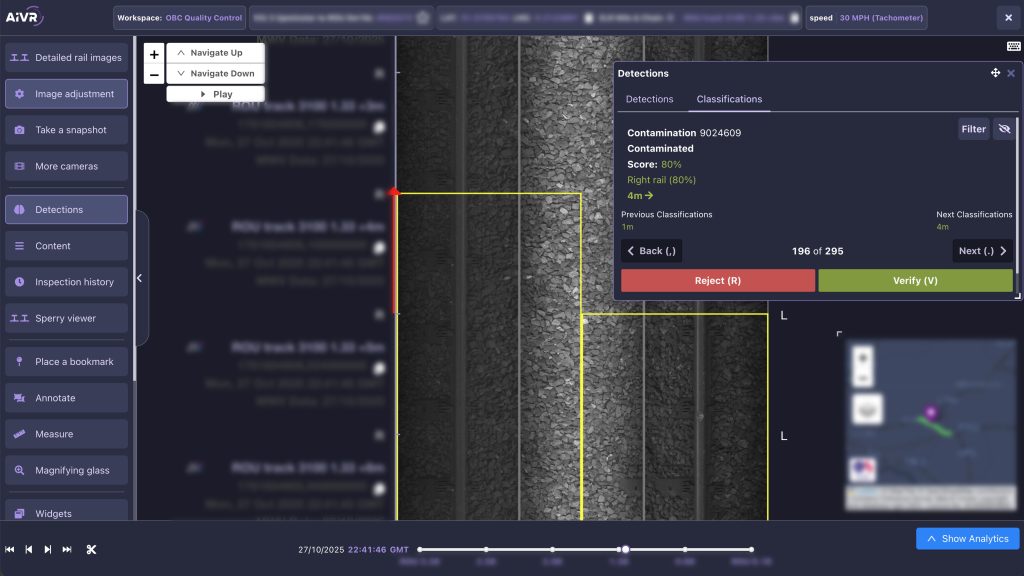
Details of an AIVR-detected contaminated rail, with portions of contamination mapped out along the line for review and maintenance.
OLE Patrols with AIVR
The rough autumn weather puts a particular stress upon OLE systems; fluctuating temperatures can cause wiring to expand and contract, and at worst, extreme weather events can compromise the integrity of entire stretches of these systems. Desktop OLE patrols using AIVR now provide the insight that engineers need to continually monitor the condition of the system, and make preventative arrangements in advance of poor weather.
OLE structures are marked along the patrol route, meaning they can be immediately reviewed from all available footage angles simultaneously. Balance weight position and temperature are also detected on each structure, as well as any bird nests forming on them during the emerging autumn, providing a full picture of an OLE structure’s condition. On the overhead lines themselves, droppers that are in danger of detaching or have become detached in high winds are then identified for treatment before they can cause pantograph damage.
All of these tools can be used in tandem to identify a range of defects remotely, thus keeping the workforce safer.
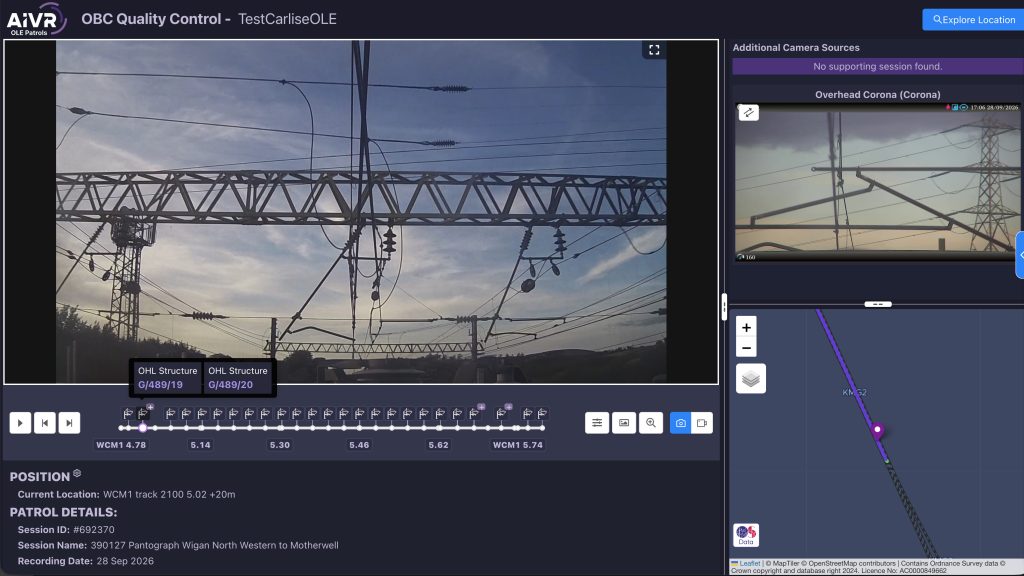
An OLE patrol as conducted through AIVR, complete with structures marked along the line and multiple camera feeds.
Conductor Rail Joint Matching
AIVR’s thermal conductor rail imagery has aided in monitoring temperatures across Kent’s rail infrastructure, allowing hotspots on the line to be identified and classified for treatment. All Class 375 trains on Network Rail’s Kent route are equipped with AIVR’s thermal and forward facing visible cameras, allowing comprehensive coverage of the route from multiple sessions and perspectives.
These sessions can then be compared in order to triangulate frequent hotspots, complete with temperature detections, and FFV footage then acts as a visual supplement to determine what exactly is causing these hotspots and precisely where they lie in the ballast. Hotspots can be classified for reference, with common causes including cables, insulators and TRJs (Third Rail Joints), allowing preemptive maintenance to take place before voltage spikes or breakages cause issues across the line.
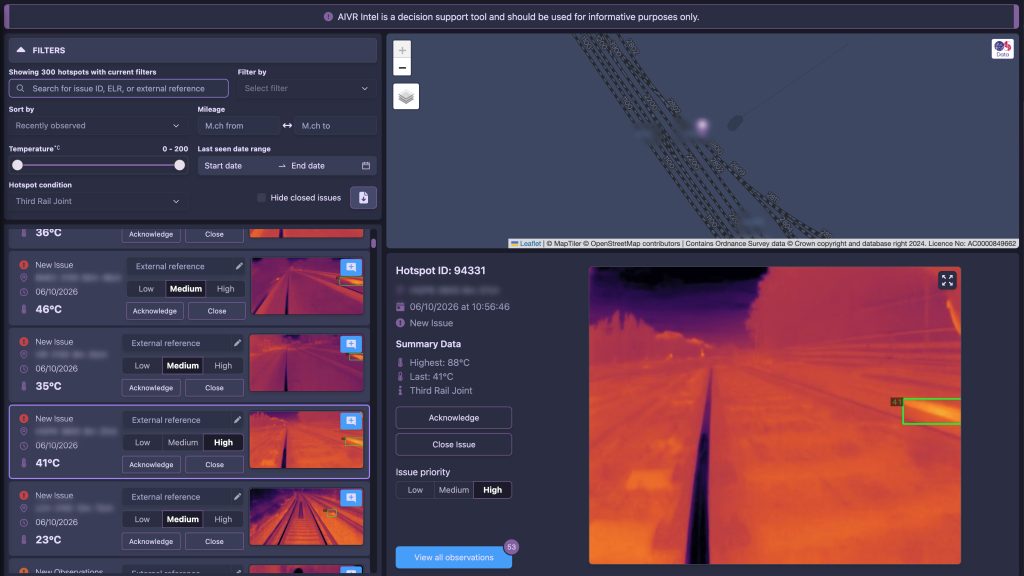
A thermal hotspot that has been recognised by AIVR, then classified as a Third Rail Joint upon examination.
Nearby Structures in AIVR Fullscreen
Complementing the improved OLE patrol functions in AIVR is the new ability to navigate nearby OLE structures in fullscreen mode for a clearer view. To use this feature:
- Enter fullscreen mode via the video player panel on a compatible session, and the “Nearby OLE Structures” option will be visible among your location details at the top of the screen.
- Use this option to highlight OLE structures ahead of or behind your current position on the line, complete with their ID and line reference, for easy navigation and monitoring of these assets.
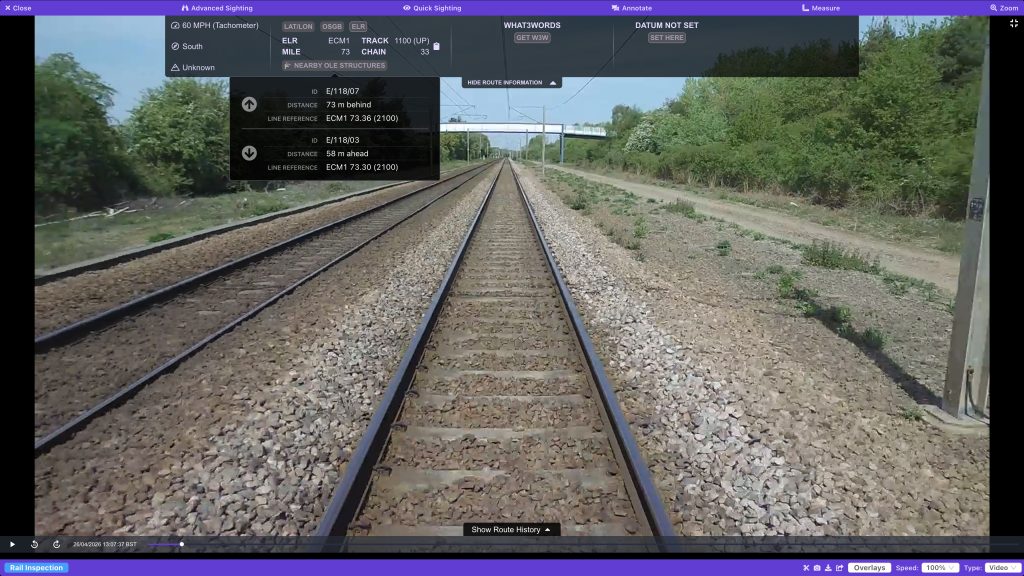
Fullscreen mode in the AIVR Platform, now augmented with nearby OLE structure navigation.
One Big Circle at InnoTrans 2026
This year’s InnoTrans expo proved to be a huge success, providing thousands of attendees the chance to connect with the team behind AIVR on our stand. Our team cherished the opportunity to connect with many familiar faces and future collaborators over the enormous 4-day event, and the buzz around AIVR couldn’t have been more exciting. Our trademark AIVR postcards, playing cards and socks continued to be a hit with attendees as well!
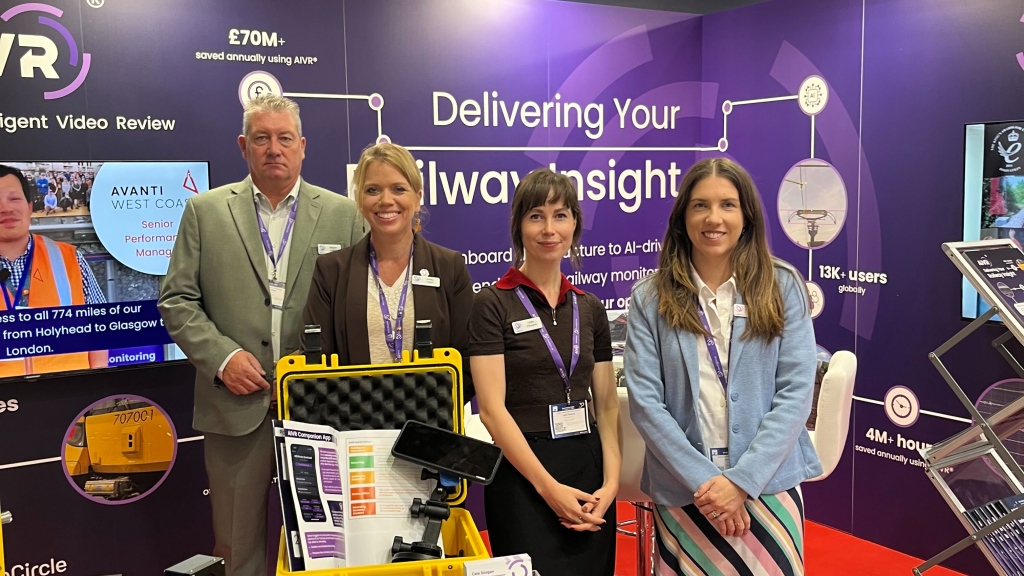
The One Big Circle team proudly presenting our AIVR suite at InnoTrans 2026.
Ballast Scanning Development
We’re excited to share that ballast scanning is now part of the AIVR suite. LiDAR equipment mounted beneath the train allows the ballast to be modelled in a 3D space, which engineers can then use to monitor track interval and ballast shoulder height remotely. This means that clearance issues or weakening track supports can be spotted early, before they lead to problems such as track buckling, without needing to go out on track. We look forward to sharing more in a future article.
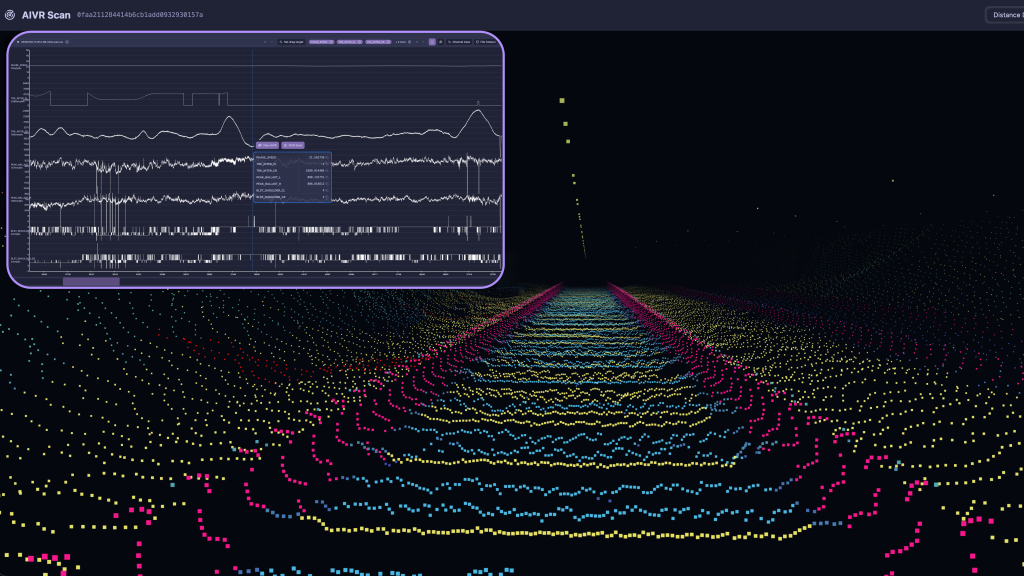
The promising results of our ever-evolving AIVR ballast scanner, already providing a wealth of useful data.
National Rail Awards Recognition
AIVR’s success continues to be recognised as One Big Circle’s work was shortlisted for two nominations at the National Rail Awards 2026: Innovation of the Year (Overhead line virtual patrol) and Outstanding Teamwork Award (Over-headline in-service monitoring programme). With AIVR’s OLE monitoring functions seeing increasing use in the field, it’s clear that these tools are meeting the high expectations of those working to maintain OLE structures across the country.
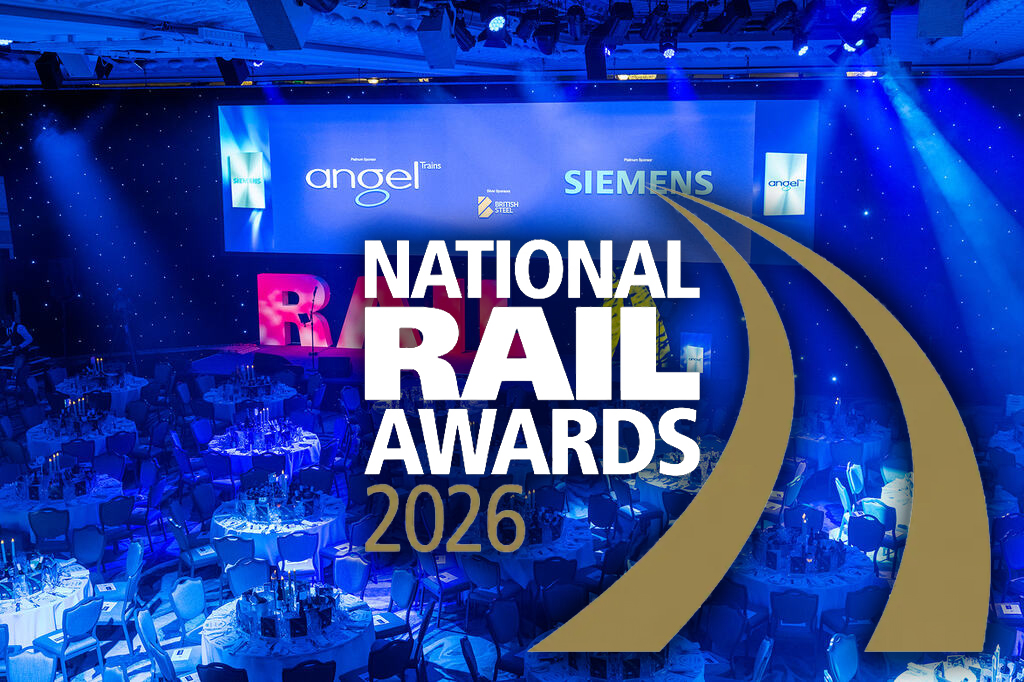
AIVR continues to be recognised among the shortlisted National Rail Awards nominees.
Where to Find Us
The One Big Circle team will be appearing at the following industry events throughout the upcoming months. Come and say hello, see our technology in action, and learn more about how AIVR is helping create a safer, smarter railway:
- 13 October – RIA Wales Rail Summit
- 15 October – TransCityRail South
- 20 October – AI, Data & Intelligent Asset Monitoring
- 21 October – RIG: The Culture Code
- 4-5 November – RIA Annual Conference
- 5 November – TransCityRail North
If you’d like to arrange a time to talk to the team at any of these events, or to book a CPD-certified training session, drop us a line at enquiries@onebigcircle.co.uk