AIVR Geometry System (AGS)
What is it
AIVR Geometry System (AGS) is an automated system that measures and assesses railway track geometry – the positional relationship between rails, in three dimensions. This unattended system measures key track geometry metrics using a combination of accelerometers, gyros and Linear Variable Differential Transformers (LVDTs) for inertial data and lasers mounted on moving trains for optical data. It then analyses the resulting data, allowing engineers to identify potential faults and fix them.
AIVR Geometry is integrated into the AIVR Platform, a suite of rail infrastructure monitoring solutions operated by One Big Circle.
It provides geometry to the Network Rail standards NR/L2/TRK/001/mod11 (Track Geometry: Inspections and minimum actions) and NR/L2/TRK/042 (Track Geometry Recording System Validation Requirements).
Why it matters
For safe operation, railways rely on rails maintaining a fixed position relative to the train and its wheels. The geometrical relationship between these elements can be expressed both in plan and profile. A number of track geometry metrics are used to assess the condition of the track.
Small deviations from correct track alignment can occur over time. They tend to arise from wear and tear, especially damage to fastenings, or movement in sleepers, ballast or formation (aka subgrade). These faults can cause rail misalignments including twist, dip and top. There may also be wear on the profile of the track (seen in cross section in the image below). Such problems can lead to derailments and service disruptions.
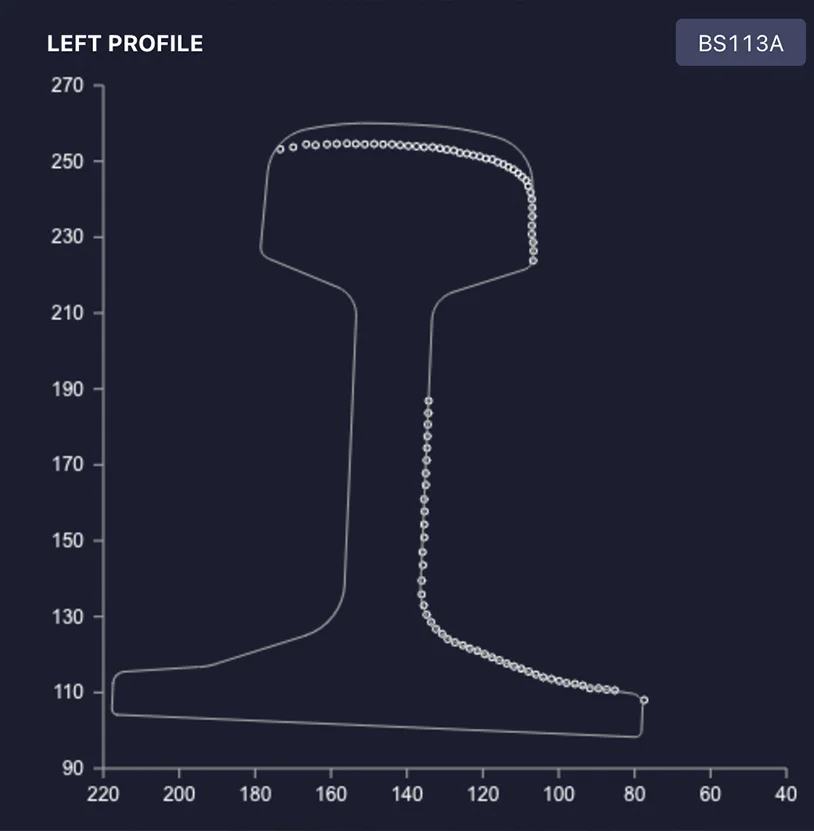
AIVR Geometry System captures the Rail Profile. White dots plot the actual measured profile visible to the laser sensor, while solid white line is an inferred ‘ideal’ profile fitted to that data.
Traditionally, tracks were manually inspected for geometry faults by workers walking the line. This exposed workers to the potentially hazardous trackside environment. It was also time-consuming and costly, requiring often disruptive track possessions.
The UK rail network required an automated track geometry monitoring system that would allow efficient remote inspection. It would also be capable of deployment at scale across various regions and rail environments.
How it works
AIVR Geometry delivers remote railway maintenance engineers a continuous stream of data on rail geometry condition, straight from the tracks.
Laser and high-speed camera sensors together with highly instrumented inertial measurement systems mounted beneath trains measure the position and profile of the rails. These measurements are used to precisely monitor essential track geometry parameters such as gauge, curve, cant and twist. This data is then automatically transmitted to AIVR Cloud for viewing and data sharing.
AIVR Geometry data is automatically uploaded via the 4G/5G network to the secure AIVR Cloud and visualised on the AIVR Platform. This allows engineers working remotely to detect subtle deviations or gradual wear before they become hazards.
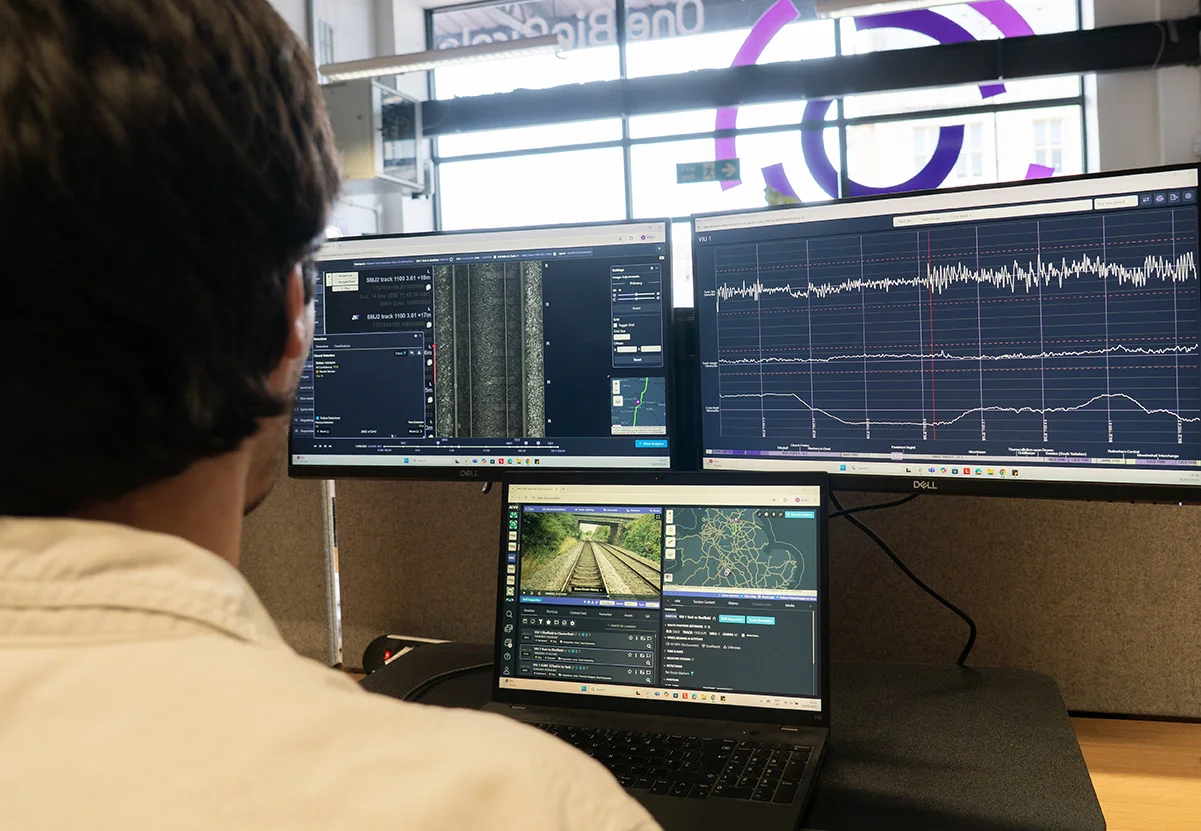
Line-scanning imagery, forward facing video and track geometry displayed on the AIVR Platform.
In contrast to conventional track geometry systems, AIVR Geometry integrates synchronised data streams from other sensor types to help engineers diagnose faults. These include line-scanning imagery, forward-facing and thermal video footage, and additional metadata. This integrated approach allows engineers to assess both geometry data and corresponding visual evidence for every section of track, enabling them to identify and prioritise areas of potential risk.
AIVR Geometry has a modular design and cloud-based processing, making it suitable for both national infrastructure operators like Network Rail and private maintenance contractors.