What are they
Balises are track-mounted transponders installed between the rails that exchange data with a passing train, primarily for train location and signalling information. (Transponders are wireless communication devices that automatically send pre‑defined responses when they receive an external signal, typically using radio frequency energy.)
A balise conforming to the European Train Control System (ETCS) standard is known as a Eurobalise.
Why they matter
Balises provide precise position reference points that calibrate the train’s odometry, which is essential for safe movement authority calculation in modern cab signalling systems. They also transmit speed limits, gradient and signal-related data to onboard equipment, enabling continuous automatic train protection and higher line speeds with fewer lineside signals.
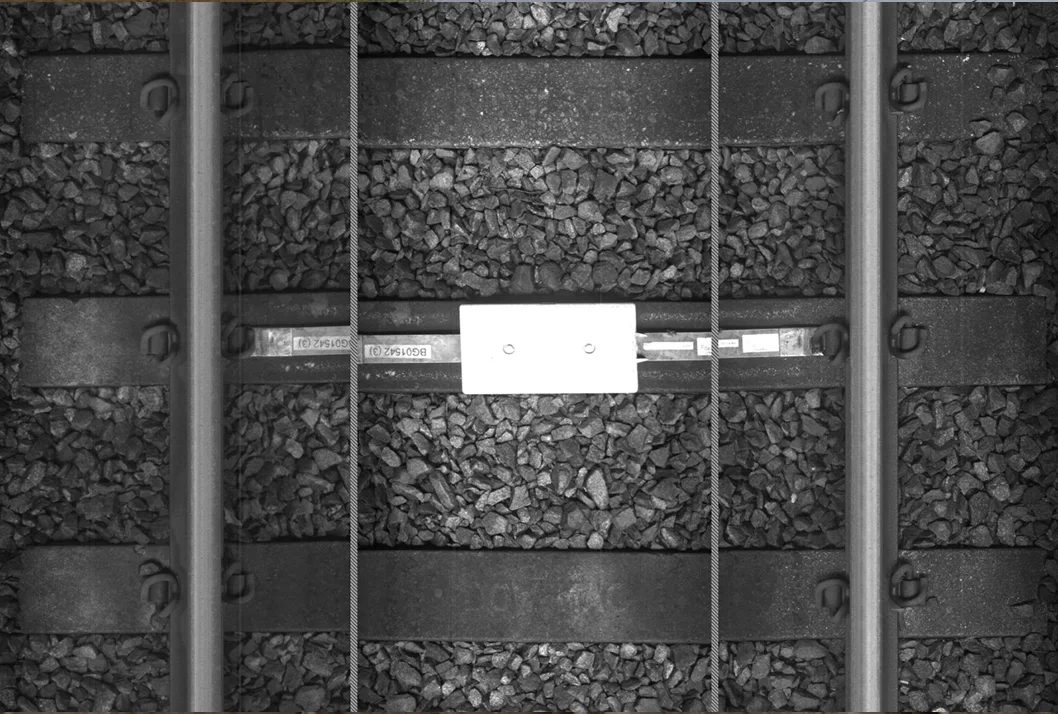
Example of an ETCS transponder balise, captured by AIVR.
Who uses them
Infrastructure managers deploy balises as part of ERTMS, national Automatic Train Protection (ATP) schemes and metro protection systems, often integrated with lineside electronic units. Train operators and rolling stock owners use balise-fitted routes with onboard ETCS or compatible equipment to run interoperable, high-density or high-speed services under automatic supervision.
When: key dates
Balise-based automatic train protection emerged with early ATP systems on metros from the late 1960s. Balises were first trialled in the UK in the 1970s, while European testing began in 1996 under ETCS. Eurobalises were specified within the 1990s ERTMS/ETCS programmes and entered practical service on European main lines in the late 1990s and early 2000s.
Where they are used
Eurobalises are now standard across much of mainland Europe and appear on high-speed, conventional and some metro lines as part of ERTMS/ETCS roll-outs.
In the UK, ETCS balises are installed on schemes such as the Great Western and East Coast main line deployments, Crossrail interfaces and other digital signalling programmes.
How they work
As a train passes over, an onboard antenna energises the balise inductively, prompting it to transmit a structured telegram at radio frequency. Fixed balises always send the same data, while controlled balises receive dynamic information from a lineside electronic unit and transmit aspect-dependent or route-dependent data in defined balise groups.