S&Cs (Switches and Crossings)
What is it
S&C is the standard railway infrastructure abbreviation for Switches and Crossings, also widely known as railway points or turnouts. These are complex and fundamental mechanical and electrical assemblies that form the junctions on a railway network.
- Switches (or Points): These are the moveable sections of rail, consisting of two tapered rails (switch rails) that are directed by an operating mechanism to connect with one of the two main running rails (stock rails). The switches guide the wheels from the main line onto a diverging track or vice versa.
- Crossings (or Frogs): These are the assemblies where the rails of two tracks intersect. They provide the necessary gaps to allow the wheel flanges of a train to pass through the path of the intersecting rail safely.
Together, S&C units are the critical components that allow a multi-track railway to function, enabling trains to change from one track to another and cross paths. Related components such as adjustment switches manage the thermal expansion of continuous welded rail at S&C locations.
When they are used
S&C units are used wherever the rail network requires connectivity, flexibility and operational routing. This includes:
- Stations: Found at both ends of platforms to allow trains to be routed into and out of specific platforms, or to move between running lines.
- Yards and Depots: Used extensively to connect storage sidings, maintenance sheds and fuelling points to the main line, allowing for shunting and stabling of rolling stock.
- Main Line Junctions: Installed on open tracks to facilitate junctions where two or more railway lines diverge or converge, often at high speeds.
- Crossovers: Placed in tandem between parallel tracks (eg up and down lines) to allow trains to move from one track to the other, often for maintenance or to overtake a slower train.
While S&C make up only a small percentage of the total track length, they are concentrated in high-traffic areas, making them vital to network capacity.
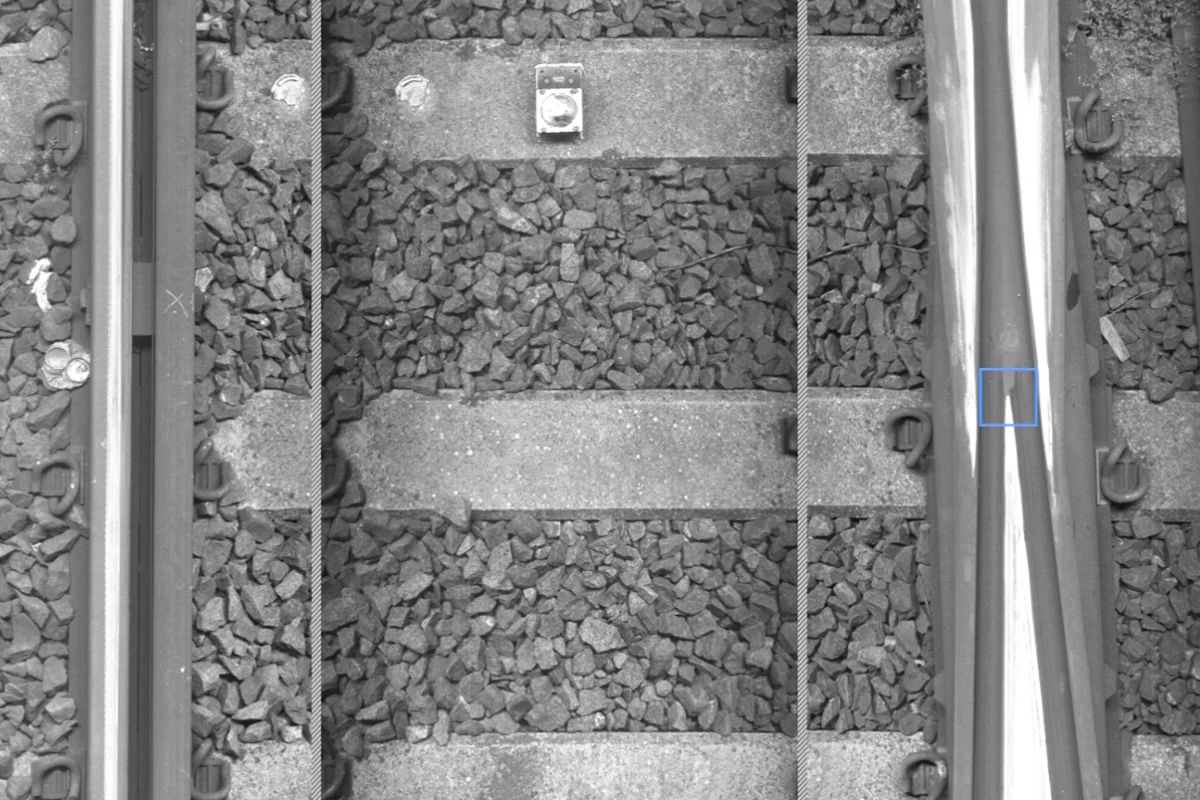
AIVR captures high-resolution imagery of S&C, supporting condition monitoring and visual inspection.
Why it matters
S&C units are among the most critical and complex assets in the railway system. Their importance is multifaceted:
- Operational Capacity: They are the bottlenecks of the network. A failure at one S&C unit can paralyse multiple routes, directly impacting on network capacity and causing extensive delays across the entire system.
- Safety: The correct alignment and locking of the switch rails are a primary safety requirement. Any misalignment can lead to a derailment, making their condition-monitoring and maintenance paramount – a challenge Network Rail addresses at scale using AIVR.
- Maintenance Cost: Due to the high dynamic forces, variable geometry, and concentration of components, S&C units suffer more wear, fatigue and damage than plain line track. They account for a disproportionately large share of railway maintenance and renewal budgets, driving contractors such as VolkerRail to adopt remote monitoring solutions
When and how is S&C maintenance performed
The need for S&C maintenance and inspection is almost constant due to their critical nature, with activities occurring:
- During Scheduled Possessions: Most major maintenance, component replacement and track renewal is conducted during planned closures (possessions) of the track, typically overnight or during weekend periods when service disruption can be minimised.
- Through Predictive Maintenance: Modern railways use trackside monitoring systems that continuously track the condition of the rails, bearings and operating mechanisms, including AIVR, made by UK firm One Big Circle, which combines forward-facing video and line-scanning imagery to monitor S&C remotely. This data triggers maintenance when a component is predicted to fail, with machine learning automatically identifying signs of wear or defect before a breakdown occurs, allowing engineers to intervene before a breakdown occurs. AIVR’s signal search tool also supports planning activities directly related to S&C locations.
- Instantly (Fault Response): When a fault is detected by the signalling system (for example a switch rail fails to lock into position), the line is immediately halted, and emergency teams are dispatched to fix the issue to restore safety and service.