Rail Infrastructure Monitoring
What is it
Rail infrastructure monitoring is the continuous measurement and assessment of the condition and performance of railway assets.
It may be conducted through physical inspections of the track environment; or through virtual patrols, using AI-assisted sensors to gather data for remote inspection.
The latter approach allows faults to be rapidly detected and scrutinised, so that maintenance can be planned before failures occur. Increasingly AI is also being deployed to analyse sensor data, delivering an improved understanding of the rail environment and allowing more faults to be predicted. This facilitates more efficient maintenance.
Rail infrastructure monitoring covers track, structures, assets and systems such as:
- Rails; sleepers; ballast and formation; switches and crossings; and track geometry
- Bridges, tunnels, earthworks and overhead line equipment, including loads, deformation, vibration and temperature.
Rail infrastructure monitoring covers all the different rail disciplines:
- Track and S&C
- Lineside
- Signalling
- Electrification and Plant (E&P – OLE/conductor rail)
- Operation, Safety and Performance
- Fleet and Rolling Stock
- Telecommunications
Sensors gather data from specialist monitoring trains and equipment on in‑service trains. Manual inspections also take place. All data is then transmitted to central systems for analysis.
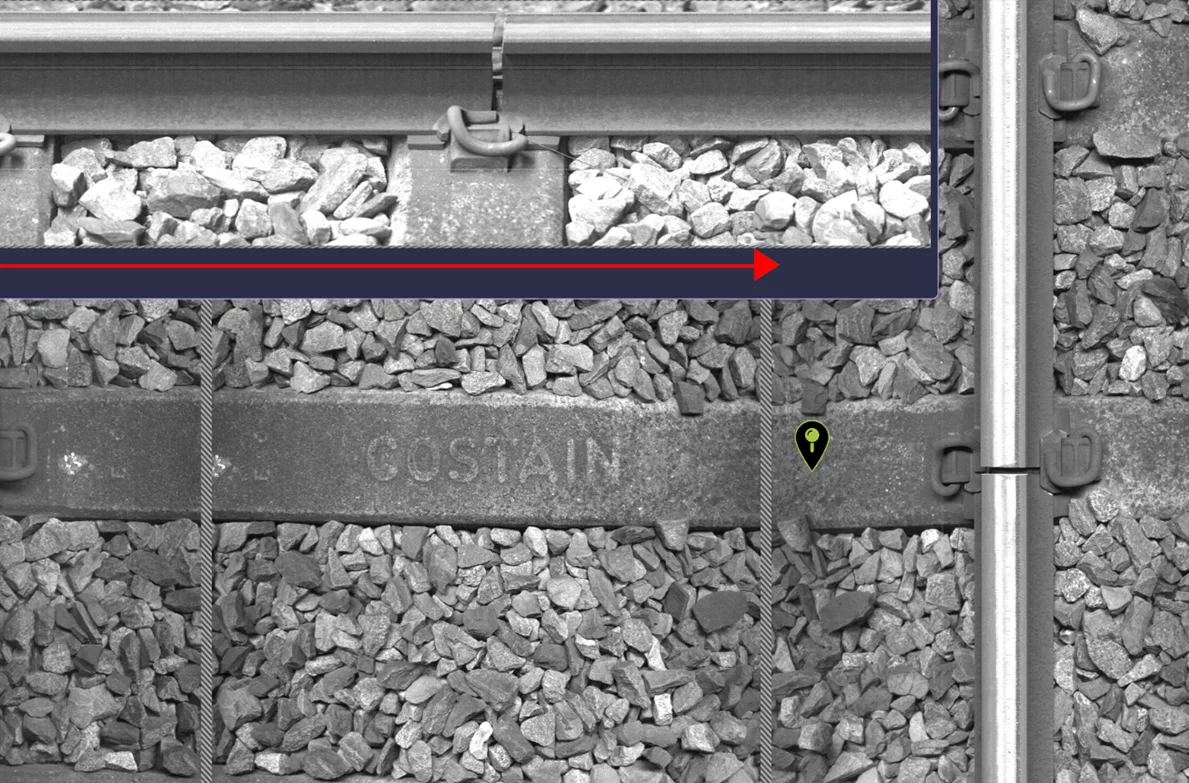
AIVR identifies and rapidly reports broken rails through AI-powered analysis, enabling rapid response to critical safety hazards.
Why monitor rail infrastructure
The main goals are to:
- Detect deterioration and defects early so maintenance can be condition‑based rather than purely schedule‑driven.
- Improve safety, reliability and availability of the railway by reducing service‑affecting failures and unplanned possessions.
- This supports a shift to “predict and prevent” maintenance, where data is used to predict future condition and intervene before a fault causes disruption.
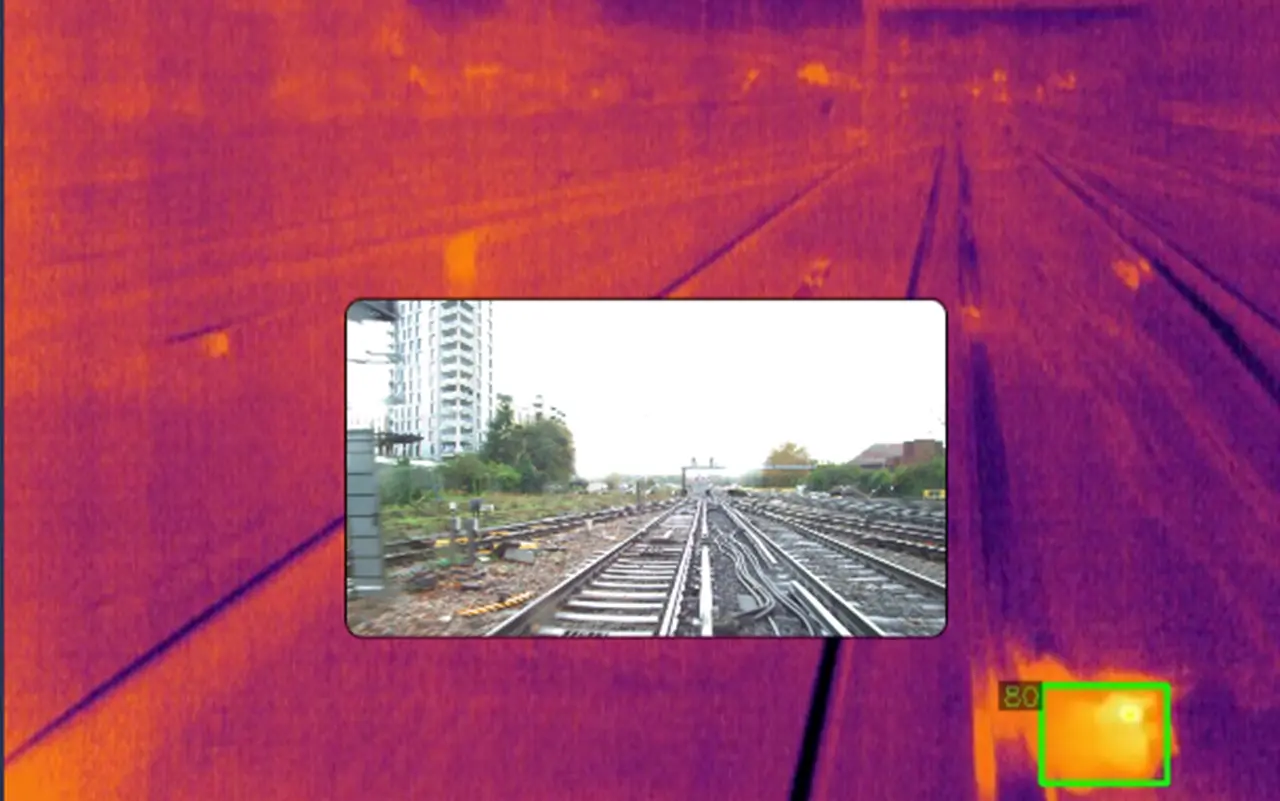
The AIVR Platform displaying side-by-side thermal and visible footage, enabling engineers to identify and assess infrastructure issues remotely.
How is it done
Railways use a mix of:
- Dedicated infrastructure monitoring trains and instrumented passenger trains to measure track geometry, rail condition and ride quality during normal operations.
- Fixed and remote condition monitoring systems on point machines, track circuits, power supplies and other critical assets, feeding into “intelligent infrastructure” platforms.
- Some solutions also use remote or satellite monitoring of wider railway corridors to detect ground movement, slope instability or flooding risk along the route.
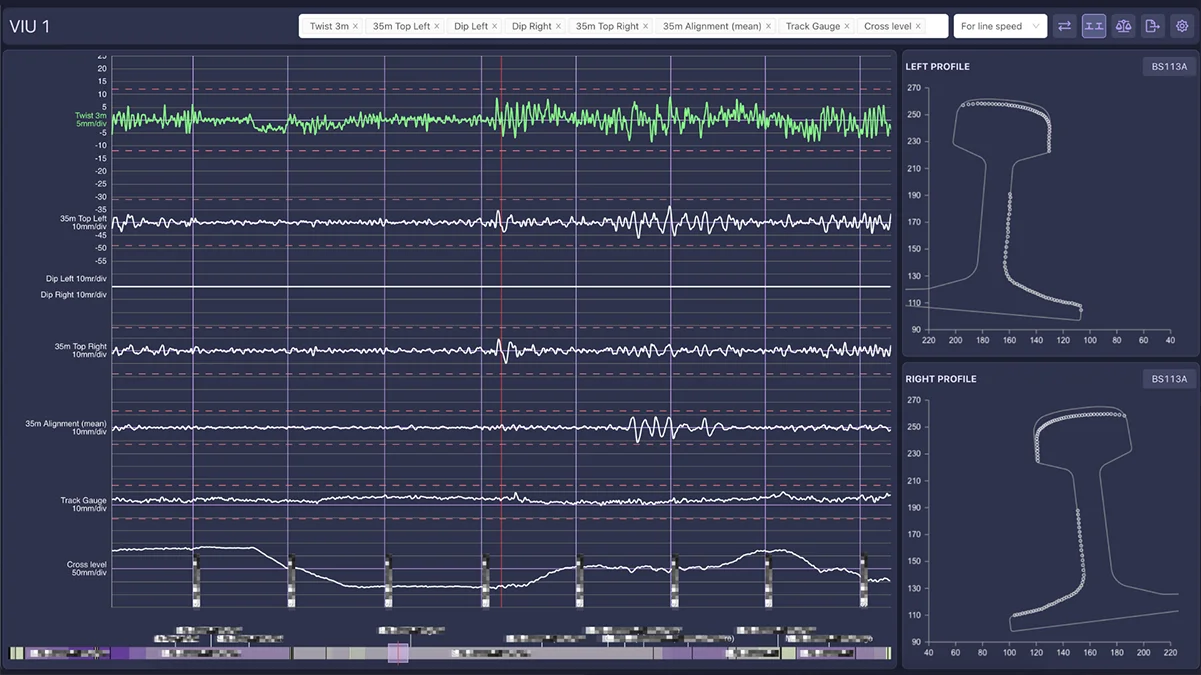
AIVR monitors track geometry, identifying deviations that could affect ride quality and safety.
Who does rail infrastructure monitoring
In the UK, Network Rail is the infrastructure manager and ultimate owner of the mainline monitoring regime, operating the “yellow fleet” to measure track geometry, rail condition and related parameters across the 20,000‑mile network.
To deliver rail infrastructure monitoring solutions, Network Rail partners with a vibrant ecosystem of bodies such as Railway Industry Association (RIA), the Permanent Way Institution (PWI) and the Rail Innovation Group, as well as private companies. In train‑borne digital monitoring, for example, One Big Circle provides AI‑enabled, train‑borne video and multi‑sensor monitoring (AIVR). This is now used by Network Rail and operators as a forward‑facing video and infrastructure monitoring service across much of the UK network.