Boots off Ballast
What is it
Boots Off Ballast is a safety-driven approach in UK railways that focuses on removing or greatly reducing the need for staff to be physically on the track and ballast during inspection, maintenance and asset monitoring activities.
It is enabled by digital and remote-sensing technologies that allow work to be planned, inspected and validated from offices, depots or other safe locations away from the running lines.
Boots off Ballast is an industry objective that shapes how new tools, standards and maintenance regimes are designed. The term is commonly used by Network Rail and suppliers to describe the shift from manual, on-foot checks to data-driven, remote and automated methods for managing infrastructure risk.
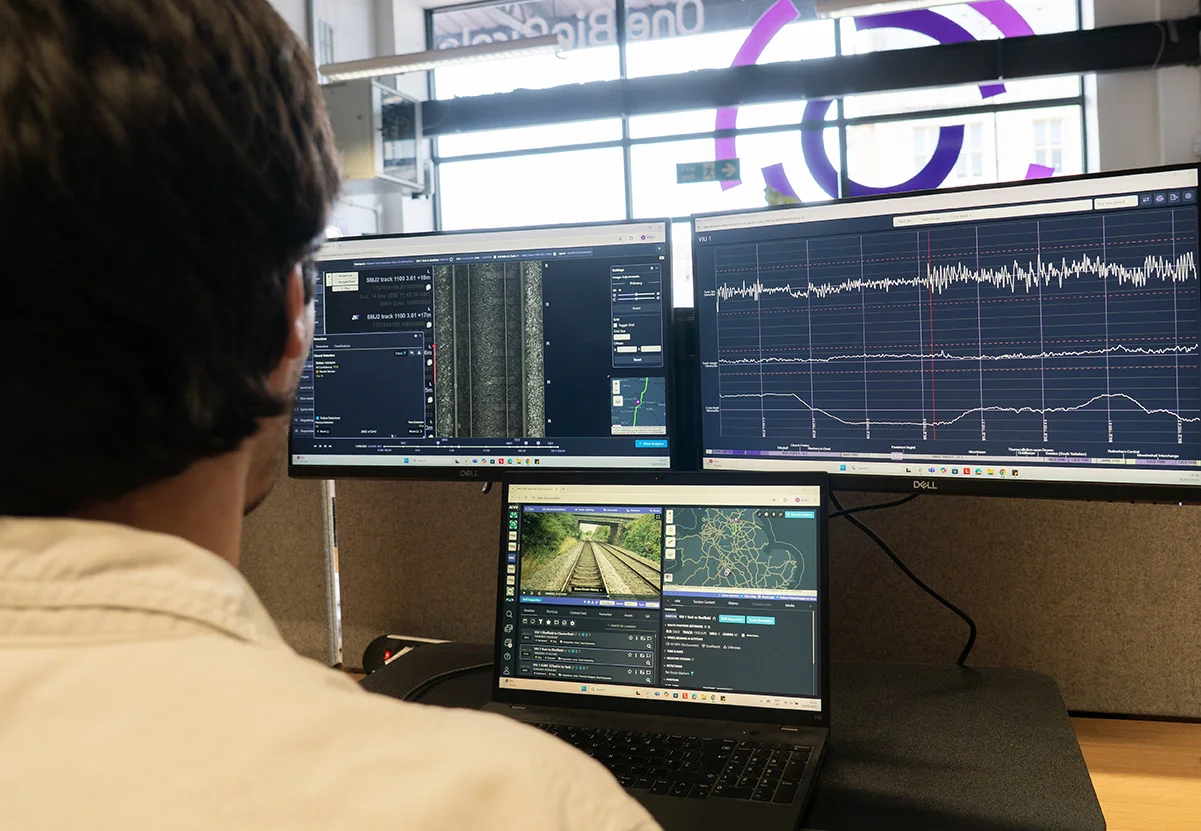
AIVR enables engineers to review their site of work from the office – inspecting track condition remotely, without needing to set foot on the ballast.
Why it matters
Boots Off Ballast directly targets one of the highest-risk environments in the railway: people working close to open lines, moving trains and live infrastructure. Reducing trackside presence lowers the chance of track worker fatalities and near-misses, and also cuts exposure to slips, trips, manual handling injuries and electrical hazards.
The approach also improves network performance and cost efficiency, because remote monitoring and automated inspection can run more frequently and at traffic speed, catching defects earlier and reducing disruptive access arrangements. This supports better asset condition knowledge, more targeted interventions and ultimately fewer delay-causing failures for passengers and freight.
When: key dates
The underlying idea of reducing live-line exposure has existed in rail safety thinking for many years, but ‘Boots Off Ballast’ emerged as a prominent phrase in the late 2010s as part of Network Rail’s safety and digital railway agenda. By 2019-2020 it was being explicitly linked to the roll-out of traffic-speed inspection technologies and new maintenance strategies focused on eliminating unnecessary track visits.
Subsequently, the term has been adopted in industry publications, conferences and innovation programmes through the early- to mid-2020s, framing it as a long-term safety and modernisation goal rather than a time-limited campaign.
How it works
Boots Off Ballast works by providing engineers and asset managers with the means to inspect infrastructure remotely, helping them to accomplish more within their limited track access time.
Infrastructure monitoring systems such as AIVR help to achieve this by operating as a co-pilot that provides trusted digital evidence of asset condition. This is particularly important as infrastructure ages and its needs become more complex.
Monitoring tools include high-resolution video, LiDAR, track geometry, overhead line monitoring and remote condition data streamed into analysis platforms for engineers to review away from the track.
This digital data is then used to trigger targeted site visits only when physical intervention is genuinely needed, often during possessions or under better-controlled protections, rather than routine patrolling.
Tools such as AIVR are also beneficial to less experienced engineers, allowing them to upskill quickly without relying purely on time-consuming walkouts to acquaint themselves with track conditions. This accelerated knowledge-transfer helps to address the skills shortfall in rail engineering, as the ageing of the workforce causes expertise to leave the industry.